Tag: Business

  • Dimon rides high on JPMorgan report of $2.7 billion profit

    On today’s financial battlefield, Jamie Dimon is Achilles, standing tall among his bloodied opponents, ready to drag their bodies in triumph.

    Is he a hero or a brute?

    Hint: Doubleclick on boxes with plus signs to expand, or click the tool bar at left for more options.

    MAP HINTS: Boxes with + signs can be expanded by doubleclicking. Solid lines are current relations. Dotted lines are former relations. For more options, right-click on a box or click on the map tools to the left. (Requires Flash)

    While so many others have fallen, he has led his company, JPMorgan Chase, to record revenues. The firm today reported profits of $2.7 billion in the second quarter, on revenues of $27.7 billion.

    Jamie Dimon
    Jamie Dimon

    “Throughout this crisis, we have remained committed to doing our part to help bring stability to the communities in which we operate and to the financial system overall,” announced the chairman and CEO.

    Dimon knows opportunity when he sees it. Calling him “one of America’s most powerful and outspoken bankers,” The New York Times notes that he is taking advantage of the financial crisis to surge well ahead of his competitors.

    The company took $25 billion in federal bailout money last year. Although he initially supported the government’s Troubled Asset Relief Program, Dimon reportedly chafed at his company being described as a bailed-out bank. JPMorgan repaid its TARP funds ahead of schedule.

    In buying out Bear Stearns and Washington Mutual, the company extended its reach not only in the financial world, but in Washington.

    Now Dimon, a director of the New York Fed, is talking tough to the Treasury Department, opposing tighter supervision of the derivatives market.

    The firm has a battery of lobbying firms in Washington, bending the ears of members of Congress about this issue and other regulatory proposals.

    “Derivatives didn’t cause the problem,” Dimon told the Economic Times last month. “They helped amplify it. It’s a perfectly legitimate instrument and we are the largest derivative dealer in the world.”

    Click here to sign up for the Muckety Newsletter


    Follow Muckety on Twitter


    This post is tagged with: , , , ,
     Read related stories: Business · Financial bailout · Recent Stories  

    0 Comments

    • There are no comments yet, be the first by filling in the form below.

    Leave a Comment


    • America loses Cronkite

      July 18, 2009 at 1:00pm

      Only Walter Cronkite could have summed up in two words the drive that propelled him to his iconic role as the most trusted voice in broadcast news.

    • Big Ed Whitacre Will Take Reins at Gm

      This post was archived from createpositivechange.org/. View the original on the Wayback Machine.

    • GM considers move from Detroit’s Renaissance Center

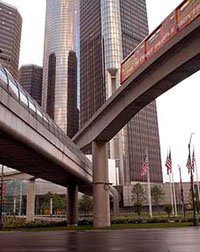
      The most visible and commanding element of Detroit’s riverfront skyline is a tubular 73-story hotel girded by four squarish 39-story office towers, all gleaming with mirrored glass. It’s called the Renaissance Center, or RenCen, but the logo at the top of the complex is “GM” – identifying it as home and world headquarters to the immensely troubled General Motors Corp.

      So when GM CEO Fritz Henderson raised the possibility Monday that the giant automaker could vacate the structure and move to the suburbs, joining Ford and Chrysler as absentee figureheads of the Motor City, it raised the threat of both real and symbolic devastation for Detroit.

      Hint: Doubleclick on boxes with plus signs to expand, or click the tool bar at left for more options.

      MAP HINTS: Boxes with + signs can be expanded by doubleclicking. Solid lines are current relations. Dotted lines are former relations. For more options, right-click on a box or click on the map tools to the left. (Requires Flash)

      Henderson, who made his comments during a press teleconference, took pains to stress that GM doesn’t “have any such plans,” at least as he spoke. Then he added the hook: “But if we did, it would be motivated by business rationale, which would be cost, efficiency and speed.

      Renaissance Center
      Renaissance Center

      “We’re looking at, frankly, everything within our business, but it’s not like we have that queued up at the top of our list. But as we look at the structure, look at the business, we’re looking at everything.”

      Having posted yet another astronomical quarterly loss – $6 billion for the first three months of 2009 – and already operating on more than $15 billion in federal loans, GM has until June 1 to come up with a restructuring plan that meets the approval of the Obama administration.

      If that includes a move out of the RenCen as part of those cost-cutting measures, it will take some 4,300 white-collar workers off Detroit income tax rolls and potentially leave yet another vacant office structure in the city’s downtown, which already has a reported vacancy rate of 30 percent. GM also pays the city about $6 million in property taxes.

      Mayor Jim Fouts of the blue-collar suburb Warren – Michigan’s third largest city, which borders Detroit on the north and has been home to GM’s one-square-mile Tech Center since 1955 – raised civic hackles last week when he suggested relocating the corporate headquarters to his city as a cost-cutting move. He pointedly dangled a carrot of no city income taxes, “unlike our sister city to the south.”

      Fouts told the Detroit Free Press that he brought it up during a private meeting with Ed Montgomery, Obama’s point man in recovery assistance for autoworkers and their communities, and Michigan Gov. Jennifer Granholm.

      Detroit’s brand-new mayor, Dave Bing – who is already tasked with finding solutions for his city’s 20-plus percent unemployment, vast residential ruin and commercial blight, multimillion-dollar deficits, epidemic crime, and enough municipal corruption to keep the FBI scurrying in an ongoing investigation – called the possibility of a GM decampment “absolutely horrendous.”

      The RenCen had been shopped unsuccessfully for two years when GM bought it for $73 million in 1996, later borrowing $500 million to reconfigure the maze-like interior design that had always frustrated visitors, and to remove massive concrete berms outside the structure that effectively cut off its entrance from the rest of downtown and gave it the feel of a well-defended citadel.

      When the complex opened in 1977, it was at an announced cost of $340 million and was the largest private construction project in Michigan history, financed by an alliance between 51 local companies, led by Henry Ford II.

      A public contest was held to give it a fitting name, and the winner was Renaissance Center, symbolizing a rebirth that, in more than 30 years since, has never come to Detroit.

      Click here to sign up for the Muckety Newsletter


      Follow Muckety on Twitter


       Read related stories: Business · Recent Stories  

      0 Comments

      • There are no comments yet, be the first by filling in the form below.

      Leave a Comment


      • GOP Gov. Jon Huntsman Jr. nominated as China ambassador

        May 16, 2009 at 3:04pm

        President Obama seems to have pulled off a slick three-fer today in announcing his nomination of Republican Utah Gov. Jon M. Huntsman Jr. as U.S. ambassador to China.

      • NY Fed’s Stephen Friedman resigns over ties to Goldman

        His nickname at Goldman Sachs was “Mr. Inside,” and for decades, Stephen Friedman’s extensive contacts and expertise made him a go-to player on Wall Street.

        But it was precisely that web of connections that raised conflict-of-interest issues in his latest job as non-executive chairman of the powerful Federal Reserve Bank of New York.

        Hint: Doubleclick on boxes with plus signs to expand, or click the tool bar at left for more options.

        MAP HINTS: Boxes with + signs can be expanded by doubleclicking. Solid lines are current relations. Dotted lines are former relations. For more options, right-click on a box or click on the map tools to the left. (Requires Flash)

        Friedman, 71, resigned from the post Thursday amid questions about his continuing ties to Goldman Sachs, which were first raised in a Wall Street Journal story Monday.

        “Although I have been in compliance with the rules, my public service motivated continuation on the Reserve Bank Board is being mischaracterized as improper,” he wrote in a letter to New York Fed President William Dudley. “The Federal Reserve System has important work to do and does not need this distraction.”

        In its story, the Journal had disclosed that Friedman was allowed to lead the New York Fed and remain a Goldman director and shareholder, in violation of Fed policy because of Goldman’s new status as a bank holding company. The New York Fed sought a one-year waiver of that rule, which was granted by the Federal Reserve board in Washington in January.

        While the waiver was under consideration, in December, Friedman bought 37,300 more Goldman shares, the paper reported. He also bought more shares the day after the waiver came through. The purchases, which gave him a $3 million paper gain, were disclosed in Securities and Exchange Commission filings.

        Friedman originally told the Journal that his role at the New York Fed wasn’t a policy-making one and that he saw “no conflict whatsoever in owning shares” of Goldman.

        He noted that when he became an economic adviser to former President George W. Bush, he had had to sell nearly all his investments, in a process he described as “very costly and a difficult thing to manage.”

        A longtime star of the financial world, Friedman had worked as an investment banker, a private-equity executive and an economic adviser to the president.

        The bulk of his career, however, was spent at Goldman Sachs, where he held numerous executive roles. He was the company’s co-chief operating officer from 1987 to 1990, co-chairman, along with his longtime friend Robert E. Rubin, from 1990 to 1992, and the sole chairman from 1992 to 1994; he still serves as a director.

        Admired for his intelligence and low-key style, Friedman has a welter of relationships in the philanthropic world as well. He is chairman emeritus of the board of Columbia University, where he attended law school, chairman emeritus of the executive committee of the Brookings Institution, and a member of the Council on Foreign Relations.

        Out of work, he is said to be an avid chess player and wrestler. A wrestling center at his alma mater, Cornell University, bears his name. His son David Benioff, wrote the screenplay for The Kite Runner and X-Men Origins: Wolverine and is married to actress Amanda Peet. His brother, Richard, is a constitutional law scholar at the University of Michigan.

        Click here to sign up for the Muckety Newsletter


        Follow Muckety on Twitter


         Read related stories: Business · Recent Stories  

        0 Comments

        • There are no comments yet, be the first by filling in the form below.

        Leave a Comment


        • Dave Bing, political neophyte, will be Detroit’s oldest mayor

          May 10, 2009 at 12:42pm

          When pro basketball hall-of-famer Dave Bing was elected May 5 as Detroit’s third mayor in less than a year, a voter turnout of just 14 percent showed they’d prefer a duke to an emperor, and age to outrage.

        • SEC sues money-fund manager Bruce Bent

          A man who fundamentally changed the nature of investing in this country has been accused of misleading investors last year.

          Bruce R. Bent Sr., 71, the co-founder of the first money market mutual fund, is the object of a civil lawsuit by the Securities and Exchange Commission that was filed Tuesday in federal court in Manhattan.

          Hint: Doubleclick on boxes with plus signs to expand, or click the tool bar at left for more options.

          MAP HINTS: Boxes with + signs can be expanded by doubleclicking. Solid lines are current relations. Dotted lines are former relations. For more options, right-click on a box or click on the map tools to the left. (Requires Flash)

          His son, Bruce Bent II, 43, the co-CEO of the fund known as the Reserve Primary Fund, is also cited in the complaint.

          Another Bent company, Reserve Management Company Inc., the fund’s manager, and Reserve Partners Inc., a broker-dealer run by Reserve Management, are also named as defendants.

          The suit charges the Bents with the “knowing dissemination of false information” about the impact of the bankruptcy of Lehman Brothers Holdings Inc. last September upon the Reserve Fund.

          According to the complaint, the Reserve Fund held $785 million in Lehman debt securities, securities that had become worthless.

          The SEC alleges that the Bents falsely assured shareholders and the fund’s trustees that, despite the Lehman loses, Reserve Management had enough capital or available credit to keep the fund’s net asset value above $1 a share.

          This proved not to be the case, and eventually the Bents acknowledged that the fund had “broken the buck” and the net asset value was below $1 a share.

          This prompted a run on the fund and a call for tougher regulation of money market funds in general.

          The Reserve Fund, which had been valued at $62.5 billion, is now in liquidation, with about 90 percent of its assets returned to investors.

          Reserve Management has held back about $3.5 billion pending the outcome of about 29 civil lawsuits. The SEC is asking that this money be released and distributed to investors in the fund.

          In a statement, the elder Bent said, “We remain confident that we acted in the best interest of our shareholders. We are hopeful that this matter can be resolved quickly.”

          Bent was a money manager at the Teachers Insurance and Annuity Association in the late 1960s.

          One day, he and his boss, Henry B. R. Brown, began chatting about strategies that would allow small investors to get higher rates on return than those offered by savings accounts.

          “I looked up at Brown and said, ‘Why not a mutual fund?’” Bent later told Fortune magazine. “He said he didn’t know anything about mutual funds. I said, ‘I don’t know anything about mutual funds either, but I think it would work.’”

          The pair went out on their own, starting the Reserve Fund in 1972. By the beginning of January 1973, they were managing $1 million.

          A story then ran that month in The New York Times, prompting interest in the fund. By the end of the year Brown and Bent were managing $100 million and mutual funds were proliferating.

          Brown, who died last August, left company management in 1985, but retained a financial interest in the business until Bent bought him out in 1999.

          In 2001, Bent ran unsuccessfully as a Republican for Nassau (NY) County executive, promising that he would serve at $1 a year and that he would improve efficiency in the government.

          This emphasis on fiscal restraint reflected Bent’s original investment principles at the Reserve Fund, which was seen as low-risk.

          But according to The Wall Street Journal, the fund’s strategies changed in 2006 and it began to invest in higher-risk financial products, including the commercial paper from Lehman Brothers that led to the fund’s demise.

          Click here to sign up for the Muckety Newsletter


          Follow Muckety on Twitter


           Read related stories: Business · Recent Stories  

          0 Comments

          • There are no comments yet, be the first by filling in the form below.

          Leave a Comment


          • Dave Bing, political neophyte, will be Detroit’s oldest mayor

            May 10, 2009 at 12:42pm

            When pro basketball hall-of-famer Dave Bing was elected May 5 as Detroit’s third mayor in less than a year, a voter turnout of just 14 percent showed they’d prefer a duke to an emperor, and age to outrage.

          • Do ties between Apple, Google pose antitrust issues?

            The Federal Trade Commission is looking into the relationships between technology stars Apple and Google to see if they might violate antitrust laws.

            The boards of Apple and Google share two directors – Eric E. Schmidt, chief executive of Google, and Arthur Levinson, former chief executive of Genentech. Former Vice President Al Gore, who is a director for Apple, is also a senior adviser for Google.

            Hint: Doubleclick on boxes with plus signs to expand, or click the tool bar at left for more options.

            MAP HINTS: Boxes with + signs can be expanded by doubleclicking. Solid lines are current relations. Dotted lines are former relations. For more options, right-click on a box or click on the map tools to the left. (Requires Flash)

            The Clayton Antitrust Act of 1914 prohibits a person’s presence on the board of two rival companies when it would reduce competition between them.

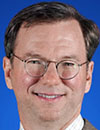
            Eric E. Schmidt
            Eric E. Schmidt

            But the FTC’s interest in the matter is unlikely to amount to much unless the agency uncovers substantial market impact, according to Information Week. While the two companies have been allies in certain areas, they compete increasingly in the cellphone and operating systems markets.

            Schmidt joined Apple’s board about five months before it unveiled the iPhone, in 2006. Google announced its plans for Android, its mobile phone operating system, nearly a year later; Schmidt now recuses himself when Apple’s board discusses mobile phones.

            The members of the company’s boards are interrelated in other endeavors as well. For instance, Google director L. John Doer is a partner in Kleiner Perkins Caufield & Byers, a venture capital group that invests in green technology and innovation. Other partners are Apple director Gore, former Apple EVP E. Floyd Kvamme and former Apple senior counsel Randy Komisar.

            And Google is an investor in the venture capital group.

            The antitrust inquiry suggests that despite the company’s closeness to the Obama administration, Google will not escape scrutiny from regulators. Another antitrust examination involving Google’s plan to digitalize books is also underway.

            Christine A. Varney, who was recently confirmed as the head of the antitrust division of the Justice Department, has singled out Google as a probable source of future antitrust concerns because of its near monopoly on Internet search and advertising.

            On the other hand, antitrust experts told the New York Times that the provision against “interlocking directorates” is rarely enforced.

            Schmidt has been an outspoken supporter of Obama. As we have reported before, Schmidt not only backed Obama, but he joined him on the campaign trail, while his employees were among Obama’s most generous contributors.

            After the campaign, Schmidt served on the Obama-Biden transition team, advising on issues involving technology.

            Schmidt was also recently appointed to the President’s Council of Advisors on Science and Technology – along with E. Floyd Kvamme, Apple’s EVP and Craig J. Mundie, chief research and strategy officer of Microsoft.

            Click here to sign up for the Muckety Newsletter


            Follow Muckety on Twitter


             Read related stories: Business · Recent Stories  

            0 Comments

            • There are no comments yet, be the first by filling in the form below.

            Leave a Comment


            • Judge rejects hardship plea from ex-Detroit mayor

              May 8, 2009 at 6:36pm

              Convicted felon and former Detroit mayor Kwame M. Kilpatrick today lost a hardship bid to reduce $6,000 in monthly restitution payments to the city for his crimes.

            • Chesapeake Energy accused of giving CEO ‘personal’ bailout

              Furious shareholders are demanding to know why directors of Oklahoma City-based Chesapeake Energy Corp. paid CEO Aubrey McClendon $112 million last year, purchased his personal art collection and co-sponsored his basketball team, even as the company’s stock price tumbled.

              The directors, who include former Oklahoma Gov. Frank Keating and former Oklahoma Sen. Don Nickles, paid McClendon more than four times what he had earned the year before. In fact, the package was one of the most generous paid to any corporate executive last year.

              Hint: Doubleclick on boxes with plus signs to expand, or click the tool bar at left for more options.

              MucketyMap

              MAP HINTS: Boxes with + signs can be expanded by doubleclicking. Solid lines are current relations. Dotted lines are former relations. For more options, right-click on a box or click on the map tools to the left. (Requires Flash)

              McClendon, 49, who had built Chesapeake into a hugely successful natural gas company until the firm hit the skids in 2008, received a one-time $75 million bonus on top of a $975,000 base salary and $20 million in stock awards, according to the company’s proxy statement.

              Chesapeake also disclosed a deal to buy McClendon’s collection of historical maps of the American Southwest, together with books, watercolors and photographs, for $12.1 million. It also paid $3.5 million to sponsor the Oklahoma City Thunder, a basketball team in which McClendon has a 20-percent stake, and spent close to $200,000 with a catering company part-owned by him, according to the proxy statement.

              “I have never seen a more shameful document than the Chesapeake proxy statement,” investor Jeffrey Bronchick wrote in a letter to Chesapeake’s board, according to the Wall Street Journal. “If I could reduce it to one page, I would frame and hang it on my office wall as a near perfect illustration of the complete collapse of appropriate corporate governance.”

              In the proxy and other filings, the company said McClendon’s new five-year contract and bonus were intended to reward him for negotiating a series of multibillion-dollar asset sales and to keep him from pursuing “other entrepreneurial opportunities.”

              But investors expressed concern that “the bonus was less a reward for outstanding service than an effort to bail Mr. McClendon out of his personal financial difficulties,” wrote Marc Gross, an attorney for the Louisiana Police Employment Retirement System, a major shareholder.

              Gross has asked an Oklahoma judge to force the company to turn over records about its deliberations over McClendon’s compensation. The filing is a first step toward a possible lawsuit accusing the board of breaching its fiduciary responsibility to shareholders.

              McClendon, a famous risk-taker, co-founded Chesapeake in 1989 with only ten employees and $50,000 in capital.

              Once, he was Chesapeake’s largest stockholder. But in October, the company’s sinking stock price forced him to sell 31.5 million shares, or 94% of his holdings at a time when the firm’s share price was at its lowest point in four years, to meet a margin call related to loans he had taken to buy the stock.

              Two months later, he and the board had negotiated a new contract. Whereas his 2007 contract had stated that he had to hold Chesapeake stock worth five times his annual salary and bonus, the new agreement lowered that requirement to only twice his salary and bonus.

              McClendon is accustomed to controversy. Last year, he donated to the presidential campaigns of both Barack Obama and John McCain. But in 2004, he was one of the largest donors to Swift Boat Vets and POWs for Truth, an organization set up in 2004 to attack the military record of Senator John Kerry, the Democratic presidential candidate.

              Bronchick, whose firm, Reed, Conner & Birdwell LLC, owns 1.18 million Chesapeake shares, said he would vote against the three Chesapeake directors who are up for election at the firm’s annual meeting in June – Richard K. Davidson, former chairman of Union Pacific, V. Burns Hargis, the president of Oklahoma State University which receives donations from Chesapeake, and Charles T. Maxwell, a senior energy analyst with Weeden & Co. a Ct-based brokerage firm.

              Fort Worth Star-Telegram columnist Mitchell Schnurman suggests the directors might have had a self-interested agenda to sign off on the new compensation package.

              “Maybe it’s a coincidence, but directors got a big pay raise last year, too,” he wrote. “Four of the eight members earned more than $700,000 each, including cash, stock, private jet flights and the ‘gross-up’ payments to cover taxes on the perks. … At those pay rates, it must be easy to hold your tongue.”

              Chesapeake’s shares are down 71% from their high last July, a bigger drop than those of other large independent energy companies such as Devon Energy Corp., Anadarko Petroleum Corp. and XTO Energy Inc. But its share price has rebounded 25.4% since the start of the year, more than many of its competitors’ shares.

              Click here to sign up for the Muckety Newsletter


              Follow Muckety on Twitter


               Read related stories: Business · Recent Stories  

              0 Comments

              • There are no comments yet, be the first by filling in the form below.

              Leave a Comment