Tag: Google Inc.

  • Do ties between Apple, Google pose antitrust issues?

    The Federal Trade Commission is looking into the relationships between technology stars Apple and Google to see if they might violate antitrust laws.

    The boards of Apple and Google share two directors – Eric E. Schmidt, chief executive of Google, and Arthur Levinson, former chief executive of Genentech. Former Vice President Al Gore, who is a director for Apple, is also a senior adviser for Google.

    Hint: Doubleclick on boxes with plus signs to expand, or click the tool bar at left for more options.

    MAP HINTS: Boxes with + signs can be expanded by doubleclicking. Solid lines are current relations. Dotted lines are former relations. For more options, right-click on a box or click on the map tools to the left. (Requires Flash)

    The Clayton Antitrust Act of 1914 prohibits a person’s presence on the board of two rival companies when it would reduce competition between them.
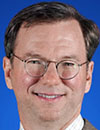
    Eric E. Schmidt
    Eric E. Schmidt

    But the FTC’s interest in the matter is unlikely to amount to much unless the agency uncovers substantial market impact, according to Information Week. While the two companies have been allies in certain areas, they compete increasingly in the cellphone and operating systems markets.

    Schmidt joined Apple’s board about five months before it unveiled the iPhone, in 2006. Google announced its plans for Android, its mobile phone operating system, nearly a year later; Schmidt now recuses himself when Apple’s board discusses mobile phones.

    The members of the company’s boards are interrelated in other endeavors as well. For instance, Google director L. John Doer is a partner in Kleiner Perkins Caufield & Byers, a venture capital group that invests in green technology and innovation. Other partners are Apple director Gore, former Apple EVP E. Floyd Kvamme and former Apple senior counsel Randy Komisar.

    And Google is an investor in the venture capital group.

    The antitrust inquiry suggests that despite the company’s closeness to the Obama administration, Google will not escape scrutiny from regulators. Another antitrust examination involving Google’s plan to digitalize books is also underway.

    Christine A. Varney, who was recently confirmed as the head of the antitrust division of the Justice Department, has singled out Google as a probable source of future antitrust concerns because of its near monopoly on Internet search and advertising.

    On the other hand, antitrust experts told the New York Times that the provision against “interlocking directorates” is rarely enforced.

    Schmidt has been an outspoken supporter of Obama. As we have reported before, Schmidt not only backed Obama, but he joined him on the campaign trail, while his employees were among Obama’s most generous contributors.

    After the campaign, Schmidt served on the Obama-Biden transition team, advising on issues involving technology.

    Schmidt was also recently appointed to the President’s Council of Advisors on Science and Technology – along with E. Floyd Kvamme, Apple’s EVP and Craig J. Mundie, chief research and strategy officer of Microsoft.

    Click here to sign up for the Muckety Newsletter


    Follow Muckety on Twitter


     Read related stories: Business · Recent Stories  

    0 Comments

    • There are no comments yet, be the first by filling in the form below.

    Leave a Comment


    • Judge rejects hardship plea from ex-Detroit mayor

      May 8, 2009 at 6:36pm

      Convicted felon and former Detroit mayor Kwame M. Kilpatrick today lost a hardship bid to reduce $6,000 in monthly restitution payments to the city for his crimes.

    • Sergey Brin donates DNA, dollars to Parkinson’s study

      Google co-founder Sergey Brin, who carries a gene mutation that predisposes him to Parkinson’s disease, is contributing his DNA and millions of dollars to research into the condition’s genetic basis.

      The study will be conducted by 23andMe, the website co-founded by his wife, Anne Wojcicki, which already harnesses users’ DNA to help them understand health risks and other genetic traits.

      Hint: Click in map to explore connectionsStory continues below interactive map 

      Click to activate this MucketyMap

      Click to activate interactive map
      (requires Java)
      MAP HINTS: Click expands a name. Control+Click centers map on a name. Solid lines are current relations. Dotted lines are former relations. For advanced tools choose Tools > Options from the menu at top. More help. Not seeing the maps? Please go here to check for the latest version of Java.

      The site hopes to recruit 10,000 people with Parkinson’s. By comparing their genetic information with that of healthy people already in 23andMe’s growing database, researchers hope to find genetic variations linked to the neurological condition.

      Sergey Brin
      Sergey Brin

      Partners include the Michael J. Fox Foundation for Parkinson’s Research, which was started by the actor with the disease, and the nonprofit Parkinson’s Institute. About 1.5 million Americans have Parkinson’s, a progressive neurological disease which interferes with movement and speech.

      Brin, 35, who Forbes ranks as the world’s 32nd richest person, told the New York Times that he would pay for most of the study’s costs, although he declined to say what that was.

      “I kind of give myself 50-50 odds of getting Parkinson’s in 20 or so years, 25 years,” he said. “But I also give it a 50-50 shot of medicine catching up to be able to deal with it.”

      Last fall, at Google’s Zeitgeist meeting, Brin revealed for the first time that his mother, Eugenia Brin, a former NASA computer engineer, had contracted Parkinson’s, and that he also carried the gene mutation that sharply increases his risk of developing the disease.

      When a member of the audience asked whether it wouldn’t be better to be ignorant of such things, Brin appeared taken aback.

      As a result of having that information, Brin said he was now in a position to encourage research about Parkinson’s and to take steps to lower his personal risk.

      A profile in The Economist described his reaction as part and parcel of his approach to the world.

      In effect, Brin said he regarded his mutation of LRRK2 as a bug in his personal code, and thus as no different from the bugs in computer code that Google’s engineers fix every day. By helping himself, he can therefore help others as well. By helping himself, he can therefore help others as well. He considers himself lucky.

      The moment in some ways sums up Mr Brin’s approach to life. Like Mr. Page, he has a vision, as Google’s motto puts it, of making all the world’s information “universally accessible and useful.”

      Brin’s faith in the transformative power of accessible information comes in part out of his family’s experience in the Soviet Union. His parents, Russian Jews, were barred from pursuing careers in physics and astronomy.

      After his family emigrated to the U.S. when he was 6, Brin followed in his father’s and grandfather’s footsteps by studying mathematics at the University of Maryland, double-majoring in computer science.

      He befriended fellow whiz kid Larry Page when he enrolled at Stanford to get a Ph.D in computer science. The two crammed their dorm room with computers and applied Brin’s data-mining system to build a superior search engine.

      The program became so popular at Stanford that they suspended their doctoral studies to start Google in a rented garage, owned coincidentally by Wojcicki’s sister.

      23andMe also grew out of Eugenia Brin’s diagnosis, according to the Times. Wojcicki, a biotech analyst, met co-founder Linda Avey because Avey was running a genetic study about Parkinson’s disease. Together, they came up with the idea of a website which would let people analyze and compare their genetic makeup (and whose name refers to the 23 pairs of chromosomes every human being carries).

      Google already has invested $3.9 million in 23andMe, which is also based in Mountain View, CA.

      Wojcicki told the Times she hopes to use the Parkinson’s study as a basis for future research collaborations. “There’s a huge opportunity for us if we can make research more efficient,” she said.

      Click here to sign up for the Muckety Newsletter


      Follow Muckety on Twitter


      Muckety's Facebook page


       Read related stories: Internet · Philanthropy · Recent Stories  

      1 Comments

      • #1.   MURALIDHARA ACHARYA 03.14.2009

        Mr. Brin is doing a commendable job. Any way, I would like to give him piece of my mind. If he undertook this to include developing or under developed nations this would have made more sense.

        Best,

        Muralidhara Acharya

      Leave a Comment


      • Edward Liddy caught in the eye of AIG storm

        March 15, 2009 at 9:42am

        AIG has been described as the company where federal dollars go to die. It may also be a career killer for Edward M. Liddy.

      • Harvard won’t let Google scan copyrighted books

        Harvard University is dropping out of Google’s massive book-scanning project involving copyrighted books, citing concerns about reader access.

        The university was among Google’s early partners for the project, but expressed reservations about the $125-million settlement reached last week between Google and authors and publishers, setting up a framework for splitting the profits from digitally copied books between the Internet titan and the original writers and publishers.

        Harvard was not a party to the suits brought by the Authors Guild and five different publishers, which led to that settlement.

        “As we understand it, the settlement contains too many potential limitations on access to, and use of the books by members of the higher-education community and by patrons of public libraries,” wrote University Library Director Robert C. Darnton in a letter to staff.

        Darnton also said he was skeptical of the subscription pricing model laid out in the settlement.

        Harvard had been one of five academic libraries – along with Stanford, Oxford, Michigan, and the New York Public Library – who had agreed to partner with Google when the book scanning initiative was announced in October 2004.

        Harvard’s decision to bar copyrighted material from the project could have broader repercussions since Harvard maintains the largest academic library in the world, and its director, Darnton, also serves as a trustee of the New York Public Library.

        However, it does not affect an earlier agreement allowing Google to scan books with expired copyrights. Of the approximately seven million books Google has scanned since 2004, four to five million are out of print and not covered by copyright laws. Among those copied from Harvard’s collection are books by Henry James, Edith Wharton, Booker T. Washington, Harriet Beecher Stowe, and Margaret Fuller.

        Under the settlement, which still must be approved by a judge, Google would publish up to 20-percent of a book’s text online at no charge to readers. The entire book would be available for a fee. Universities, libraries and other organizations would be able to buy subscriptions to make entire collections available to their users online.

        Google plans to take 37 percent of the revenue, leaving 63 percent for publishers and authors. If Google sells ads on pages where previews of scanned books appear, it will split the revenue on the same basis.

        Harvard officials said the university would reconsider its participation if the deal were restructured with more “reasonable terms.”

        Click here to sign up for the Muckety Newsletter


         Read related stories: Business · Recent Stories  

        0 Comments

        • There are no comments yet, be the first by filling in the form below.

        Leave a Comment


        The relationship map to the left is interactive.
        • Solid lines are current relations. Dotted lines are former relations.
        • Expand items with + signs by double-clicking or by selecting multiple items in the map and pressing the “e” key.
        • Move an item in the map by clicking and dragging.
        • You can also delete items, separate boxes and save maps. Right-click on the map or select Map Tools for these options.
        • Find out more about an item in the map by right-clicking on the item and choosing Information about…
        • View map color key.
        • This interactive map requires Flash player.


        • FDR knew networks

          July 29, 2010 at 8:03am

          A 75-year-old document released Wednesday by the National Archives highlights Franklin Roosevelt’s keen understanding of network dynamics.