This post was archived from createpositivechange.org/. View the original on the Wayback Machine.
Category: Recent Stories
-
NY Fed’s Stephen Friedman resigns over ties to Goldman
His nickname at Goldman Sachs was “Mr. Inside,” and for decades, Stephen Friedman’s extensive contacts and expertise made him a go-to player on Wall Street.
But it was precisely that web of connections that raised conflict-of-interest issues in his latest job as non-executive chairman of the powerful Federal Reserve Bank of New York.
Hint: Doubleclick on boxes with plus signs to expand, or click the tool bar at left for more options.
MAP HINTS: Boxes with + signs can be expanded by doubleclicking. Solid lines are current relations. Dotted lines are former relations. For more options, right-click on a box or click on the map tools to the left. (Requires Flash)Friedman, 71, resigned from the post Thursday amid questions about his continuing ties to Goldman Sachs, which were first raised in a Wall Street Journal story Monday.
“Although I have been in compliance with the rules, my public service motivated continuation on the Reserve Bank Board is being mischaracterized as improper,” he wrote in a letter to New York Fed President William Dudley. “The Federal Reserve System has important work to do and does not need this distraction.”
In its story, the Journal had disclosed that Friedman was allowed to lead the New York Fed and remain a Goldman director and shareholder, in violation of Fed policy because of Goldman’s new status as a bank holding company. The New York Fed sought a one-year waiver of that rule, which was granted by the Federal Reserve board in Washington in January.
While the waiver was under consideration, in December, Friedman bought 37,300 more Goldman shares, the paper reported. He also bought more shares the day after the waiver came through. The purchases, which gave him a $3 million paper gain, were disclosed in Securities and Exchange Commission filings.
Friedman originally told the Journal that his role at the New York Fed wasn’t a policy-making one and that he saw “no conflict whatsoever in owning shares” of Goldman.
He noted that when he became an economic adviser to former President George W. Bush, he had had to sell nearly all his investments, in a process he described as “very costly and a difficult thing to manage.”
A longtime star of the financial world, Friedman had worked as an investment banker, a private-equity executive and an economic adviser to the president.
The bulk of his career, however, was spent at Goldman Sachs, where he held numerous executive roles. He was the company’s co-chief operating officer from 1987 to 1990, co-chairman, along with his longtime friend Robert E. Rubin, from 1990 to 1992, and the sole chairman from 1992 to 1994; he still serves as a director.
Admired for his intelligence and low-key style, Friedman has a welter of relationships in the philanthropic world as well. He is chairman emeritus of the board of Columbia University, where he attended law school, chairman emeritus of the executive committee of the Brookings Institution, and a member of the Council on Foreign Relations.
Out of work, he is said to be an avid chess player and wrestler. A wrestling center at his alma mater, Cornell University, bears his name. His son David Benioff, wrote the screenplay for The Kite Runner and X-Men Origins: Wolverine and is married to actress Amanda Peet. His brother, Richard, is a constitutional law scholar at the University of Michigan.
Click here to sign up for the Muckety Newsletter


This post is tagged with: Business, Columbia University, David Benioff, Federal Reserve Bank of New York, Goldman Sachs Group, Recent Stories, Robert E. Rubin, Stephen FriedmanRead related stories: Business · Recent Stories
-
Dave Bing, political neophyte, will be Detroit’s oldest mayorMay 10, 2009 at 12:42pm
When pro basketball hall-of-famer Dave Bing was elected May 5 as Detroit’s third mayor in less than a year, a voter turnout of just 14 percent showed they’d prefer a duke to an emperor, and age to outrage.
Judge rejects hardship plea from ex-Detroit mayor
Convicted felon and former Detroit mayor Kwame M. Kilpatrick today lost a hardship bid to reduce $6,000 in monthly restitution payments to the city for his crimes.
As part of a plea deal last year to end criminal prosecution in a sex and obstruction-of-justice scandal, the ex-mayor agreed to repay Detroit taxpayers $1 million, resign his office, serve four months in jail, forfeit his law license and refrain from running for elected office for five years.
Hint: Doubleclick on boxes with plus signs to expand, or click the tool bar at left for more options.
MAP HINTS: Boxes with + signs can be expanded by doubleclicking. Solid lines are current relations. Dotted lines are former relations. For more options, right-click on a box or click on the map tools to the left. (Requires Flash)After his release from jail, Kilpatrick moved his family to a Dallas suburb where he lives in a 2,800-square-foot home, drives a Cadillac Escalade, and earns a base salary of more than $100,000 with income potential of as much as $360,000 a year as a software salesman for Covisint, a subsidiary of Detroit-based Compuware Corp.
Chairman and CEO Peter Karmanos, who moved Compuware headquarters to downtown Detroit in a political deal with Kilpatrick, said when he hired the confessed perjurer that he is “on a short leash,” and will be fired if an ongoing federal investigation of corruption in Detroit leads to new charges against him.
Kilpatrick claimed hardship in the terms of his restitution, saying that after all monthly living expenses, only $6 remained to repay the city.
Wayne County Circuit Judge David Groner, who had ordered those terms as part of Kilpatrick’s plea deal, said Kilpatrick will have to reconsider the “lifestyle in which he has grown accustomed.”
“In other words,” Groner ruled, the ex-mayor “may not be able to sustain an upper-middle-class existence while he still owes a debt to society and a substantial financial debt to the citizens of Detroit.”
Click here to sign up for the Muckety Newsletter
Read related stories: Crime · Recent Stories0 Comments
-
There are no comments yet, be the first by filling in the form below.
Leave a Comment
-
Dave Bing, political neophyte, will be Detroit’s oldest mayorMay 10, 2009 at 12:42pm
When pro basketball hall-of-famer Dave Bing was elected May 5 as Detroit’s third mayor in less than a year, a voter turnout of just 14 percent showed they’d prefer a duke to an emperor, and age to outrage.
SEC sues money-fund manager Bruce Bent
A man who fundamentally changed the nature of investing in this country has been accused of misleading investors last year.
Bruce R. Bent Sr., 71, the co-founder of the first money market mutual fund, is the object of a civil lawsuit by the Securities and Exchange Commission that was filed Tuesday in federal court in Manhattan.
Hint: Doubleclick on boxes with plus signs to expand, or click the tool bar at left for more options.
MAP HINTS: Boxes with + signs can be expanded by doubleclicking. Solid lines are current relations. Dotted lines are former relations. For more options, right-click on a box or click on the map tools to the left. (Requires Flash)His son, Bruce Bent II, 43, the co-CEO of the fund known as the Reserve Primary Fund, is also cited in the complaint.
Another Bent company, Reserve Management Company Inc., the fund’s manager, and Reserve Partners Inc., a broker-dealer run by Reserve Management, are also named as defendants.
The suit charges the Bents with the “knowing dissemination of false information” about the impact of the bankruptcy of Lehman Brothers Holdings Inc. last September upon the Reserve Fund.
According to the complaint, the Reserve Fund held $785 million in Lehman debt securities, securities that had become worthless.
The SEC alleges that the Bents falsely assured shareholders and the fund’s trustees that, despite the Lehman loses, Reserve Management had enough capital or available credit to keep the fund’s net asset value above $1 a share.
This proved not to be the case, and eventually the Bents acknowledged that the fund had “broken the buck” and the net asset value was below $1 a share.
This prompted a run on the fund and a call for tougher regulation of money market funds in general.
The Reserve Fund, which had been valued at $62.5 billion, is now in liquidation, with about 90 percent of its assets returned to investors.
Reserve Management has held back about $3.5 billion pending the outcome of about 29 civil lawsuits. The SEC is asking that this money be released and distributed to investors in the fund.
In a statement, the elder Bent said, “We remain confident that we acted in the best interest of our shareholders. We are hopeful that this matter can be resolved quickly.”
Bent was a money manager at the Teachers Insurance and Annuity Association in the late 1960s.
One day, he and his boss, Henry B. R. Brown, began chatting about strategies that would allow small investors to get higher rates on return than those offered by savings accounts.
“I looked up at Brown and said, ‘Why not a mutual fund?’” Bent later told Fortune magazine. “He said he didn’t know anything about mutual funds. I said, ‘I don’t know anything about mutual funds either, but I think it would work.’”
The pair went out on their own, starting the Reserve Fund in 1972. By the beginning of January 1973, they were managing $1 million.
A story then ran that month in The New York Times, prompting interest in the fund. By the end of the year Brown and Bent were managing $100 million and mutual funds were proliferating.
Brown, who died last August, left company management in 1985, but retained a financial interest in the business until Bent bought him out in 1999.
In 2001, Bent ran unsuccessfully as a Republican for Nassau (NY) County executive, promising that he would serve at $1 a year and that he would improve efficiency in the government.
This emphasis on fiscal restraint reflected Bent’s original investment principles at the Reserve Fund, which was seen as low-risk.
But according to The Wall Street Journal, the fund’s strategies changed in 2006 and it began to invest in higher-risk financial products, including the commercial paper from Lehman Brothers that led to the fund’s demise.
Click here to sign up for the Muckety Newsletter
This post is tagged with: Bruce Bent II, Bruce R. Bent Sr., Business, Reserve Management Company Inc., Reserve Primary Fund, SECRead related stories: Business · Recent Stories0 Comments
-
There are no comments yet, be the first by filling in the form below.
Leave a Comment
-
Dave Bing, political neophyte, will be Detroit’s oldest mayorMay 10, 2009 at 12:42pm
When pro basketball hall-of-famer Dave Bing was elected May 5 as Detroit’s third mayor in less than a year, a voter turnout of just 14 percent showed they’d prefer a duke to an emperor, and age to outrage.
Inez Tenenbaum, early Obama supporter, to head consumer safety commission
Returning a political favor, President Barack Obama has nominated Inez Moore Tenenbaum to be the new chairman of the Consumer Product Safety Commission.
Tenenbaum, the former state superintendent of education in South Carolina, was an early backer of Obama’s presidential race and helped him win the crucial South Carolina presidential primary.
Hint: Doubleclick on boxes with plus signs to expand, or click the tool bar at left for more options.
MAP HINTS: Boxes with + signs can be expanded by doubleclicking. Solid lines are current relations. Dotted lines are former relations. For more options, right-click on a box or click on the map tools to the left. (Requires Flash)If confirmed by the Senate, Tenenbaum, a lawyer, will take over an agency that has been faulted for not protecting the public from unsafe toys and other products. She would replace Nancy A. Nord, a George W. Bush nominee.
Tenenbaum, 58, served two elected terms as South Carolina’s education chief from 1999 to 2007. Test scores rose while she was in office, and she brought full-day kindergarten to the state.
In 2004, she ran unsuccessfully for the U.S. Senate, losing to Republican Jim DeMint.
In April 2007, Tenenbaum endorsed Obama for president. At the time, Sen. Hillary Rodham Clinton of New York was the favorite to win the Democratic nomination.
During the Democratic primary, Tenenbaum served as the steering committee co-chair of Obama’s campaign in South Carolina, where the primary proved critical.
Obama won easily, gaining his second primary victory. He also regained the momentum he established by winning in Iowa but had lost by losing in New Hampshire.
On primary night in South Carolina, Obama’s gratitude toward Tenenbaum was obvious, wrote columnist Howard Fineman in Newsweek.
“When he climbed down off the stage … the first person he embraced (after his wife, Michelle) was Tenenbaum,” Fineman wrote in December.
Fineman went on to predict correctly that, even though Obama had a debt to Tenenbaum, he wouldn’t name her U.S. secretary of education, despite her background in the field.
That proved to be the case, the post going to Arne Duncan, the CEO of Chicago public schools, as Fineman wrote it might.
In announcing the nomination of Tenenbaum, the White House stressed that the Consumer Product Safety Commission will have a high priority in the Obama administration.
“We must do more to protect the American public – especially our nation’s children — from being harmed by unsafe products,” Obama said in a statement.
The president has increased the number of commissioners from three to five and he hopes to double the commission’s budget.
Obama has also nominated Robert S. Adler, a lawyer and former adviser to the commission, to serve as a commissioner.
Adler, who is now a professor at the University of North Carolina’s Kenan-Flagler Business School, served on the Obama’s presidential transition team.
Click here to sign up for the Muckety Newsletter
This post is tagged with: Consumer Product Safety Commission, Inez Moore Tenenbaum, Politics, Robert S. Adler, South CarolinaRead related stories: Politics · Recent Stories1 Comments
-
Quoting…
“We must do more to protect the American public – especially our nation’s children — from being harmed by unsafe products,” Obama said in a statement.It is interesting to see that in a time of economic crisis, we keep focusing on “expansion” of government priorities and focus. Every appointment is stressed as how “critical” it is and how much attention it will garner from the new presidency. As is relevant by the foreclosure crisis, there simply isn’t enough money to go around expanding everything…
Tony S.
Leave a Comment
-
Judge rejects hardship plea from ex-Detroit mayorMay 8, 2009 at 6:36pm
Convicted felon and former Detroit mayor Kwame M. Kilpatrick today lost a hardship bid to reduce $6,000 in monthly restitution payments to the city for his crimes.
Do ties between Apple, Google pose antitrust issues?
The Federal Trade Commission is looking into the relationships between technology stars Apple and Google to see if they might violate antitrust laws.
The boards of Apple and Google share two directors – Eric E. Schmidt, chief executive of Google, and Arthur Levinson, former chief executive of Genentech. Former Vice President Al Gore, who is a director for Apple, is also a senior adviser for Google.
Hint: Doubleclick on boxes with plus signs to expand, or click the tool bar at left for more options.
MAP HINTS: Boxes with + signs can be expanded by doubleclicking. Solid lines are current relations. Dotted lines are former relations. For more options, right-click on a box or click on the map tools to the left. (Requires Flash)The Clayton Antitrust Act of 1914 prohibits a person’s presence on the board of two rival companies when it would reduce competition between them.
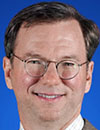
Eric E. SchmidtBut the FTC’s interest in the matter is unlikely to amount to much unless the agency uncovers substantial market impact, according to Information Week. While the two companies have been allies in certain areas, they compete increasingly in the cellphone and operating systems markets.
Schmidt joined Apple’s board about five months before it unveiled the iPhone, in 2006. Google announced its plans for Android, its mobile phone operating system, nearly a year later; Schmidt now recuses himself when Apple’s board discusses mobile phones.
The members of the company’s boards are interrelated in other endeavors as well. For instance, Google director L. John Doer is a partner in Kleiner Perkins Caufield & Byers, a venture capital group that invests in green technology and innovation. Other partners are Apple director Gore, former Apple EVP E. Floyd Kvamme and former Apple senior counsel Randy Komisar.
And Google is an investor in the venture capital group.
The antitrust inquiry suggests that despite the company’s closeness to the Obama administration, Google will not escape scrutiny from regulators. Another antitrust examination involving Google’s plan to digitalize books is also underway.
Christine A. Varney, who was recently confirmed as the head of the antitrust division of the Justice Department, has singled out Google as a probable source of future antitrust concerns because of its near monopoly on Internet search and advertising.
On the other hand, antitrust experts told the New York Times that the provision against “interlocking directorates” is rarely enforced.
Schmidt has been an outspoken supporter of Obama. As we have reported before, Schmidt not only backed Obama, but he joined him on the campaign trail, while his employees were among Obama’s most generous contributors.
After the campaign, Schmidt served on the Obama-Biden transition team, advising on issues involving technology.
Schmidt was also recently appointed to the President’s Council of Advisors on Science and Technology – along with E. Floyd Kvamme, Apple’s EVP and Craig J. Mundie, chief research and strategy officer of Microsoft.
Click here to sign up for the Muckety Newsletter
This post is tagged with: Al Gore, Apple Inc., Business, Christine Varney, E. Floyd Kvamme, Eric Schmidt. Arthur Levinson, Federal Trade Commission, Google Inc., Kleiner Perkins Caufield & Byers, L. John Doer, President’s Council of Advisors on Science and Technolo, Randy KomisarRead related stories: Business · Recent Stories0 Comments
-
There are no comments yet, be the first by filling in the form below.
Leave a Comment
-
Judge rejects hardship plea from ex-Detroit mayorMay 8, 2009 at 6:36pm
Convicted felon and former Detroit mayor Kwame M. Kilpatrick today lost a hardship bid to reduce $6,000 in monthly restitution payments to the city for his crimes.
Court-appointed trustee goes after Madoff family’s wealth
It looks like court-appointed Madoff trustee Irving Picard is going after the whole shebang: Not just Bernard Madoff’s Manhattan penthouse and home in the Hamptons, but also a good chunk of the wealth accumulated by his wife, brother and sons.
In his latest filing in U.S. Bankruptcy Court in New York, Picard argues that the convicted swindler used his firm, Bernard L. Madoff Investment Securities (BLMIS), “as his personal piggy bank” to support “a lavish lifestyle” for himself and his wife, as well as for his brother and other members of his family.
Hint: Doubleclick on boxes with plus signs to expand, or click the tool bar at left for more options.
MAP HINTS: Boxes with + signs can be expanded by doubleclicking. Solid lines are current relations. Dotted lines are former relations. For more options, right-click on a box or click on the map tools to the left. (Requires Flash)“Madoff used BLMIS to siphon funds which were, in reality, other people’s money, for his personal use and the benefit of his inner circle,” Picard says in the filing submitted Tuesday evening. “Plain and simple, he stole it.”
Picard, who is charged with returning as much money as possible to burned investors, contends that Madoff used money stolen from investors, for instance, to buy country club memberships for himself, his wife and one of his sons.
He also loaned $9 million to his brother, the firm’s chief compliance officer, in 2007, from one of the firm’s accounts, according to the papers. Picard said there is no evidence the loan was ever repaid. Peter Madoff’s wife, Marion, was also listed on the firm’s payroll with a salary of $163,500 in 2008, although there is no indication she did any work.
The firm also gave money to ventures begun by Madoff family members, including $1.7 million to Madoff Energy Holdings LLC, owned by Madoff’s sons Andrew and Mark, and his niece, Shana Madoff, the filing said.
The firm paid out $4.5 million to support Ruth Madoff’s real-estate-related investments through various entities under the name “Sterling,” with no benefit to Madoff’s firm or his customers, according to the papers.
Madoff placed his boat captain, his maid and his house-sitter in Florida on the firm’s payroll, and used the firm to provided corporate credit cards to his son’s wife and brother’s wife, even though they didn’t work for him, according to the filing.
More than $11.5 million was used to buy two yachts for the Madoff family, the filing said. Another $4.4 million appears to have been used by Andrew Madoff last October to purchase an Upper East Side apartment, while $6.5 million was loaned to Mark Madoff and his wife, Stephanie, last spring to purchase property on Nantucket, again with no evidence that any money was repaid.
Bernard Madoff, 71, was arrested Dec. 11 and pleaded guilty March 12 to running a $65-billion Ponzi scheme in which early investors were paid with the money of new clients. He is in jail, awaiting sentencing, and faces as much as 150 years in prison for various counts of securities fraud and other crimes.
Picard made the allegations in connection with his attempt to consolidate the bankruptcy proceedings of Madoff’s companies with those filed against Madoff by a group of investors.
Click here to sign up for the Muckety Newsletter
This post is tagged with: Andrew Madoff, Bernard L. Madoff Investment Securities, Bernard Madoff, Irving Picard, Madoff, Madoff Energy Holdings LLC, Mark Madoff, Peter Madoff, Recent Stories, Ruth Madoff, Shana MadoffRead related stories: Madoff · Recent Stories0 Comments
-
There are no comments yet, be the first by filling in the form below.
Leave a Comment
-
Judge rejects hardship plea from ex-Detroit mayorMay 8, 2009 at 6:36pm
Convicted felon and former Detroit mayor Kwame M. Kilpatrick today lost a hardship bid to reduce $6,000 in monthly restitution payments to the city for his crimes.
Chesapeake Energy accused of giving CEO ‘personal’ bailout
Furious shareholders are demanding to know why directors of Oklahoma City-based Chesapeake Energy Corp. paid CEO Aubrey McClendon $112 million last year, purchased his personal art collection and co-sponsored his basketball team, even as the company’s stock price tumbled.
The directors, who include former Oklahoma Gov. Frank Keating and former Oklahoma Sen. Don Nickles, paid McClendon more than four times what he had earned the year before. In fact, the package was one of the most generous paid to any corporate executive last year.
Hint: Doubleclick on boxes with plus signs to expand, or click the tool bar at left for more options.
 MAP HINTS: Boxes with + signs can be expanded by doubleclicking. Solid lines are current relations. Dotted lines are former relations. For more options, right-click on a box or click on the map tools to the left. (Requires Flash)
McClendon, 49, who had built Chesapeake into a hugely successful natural gas company until the firm hit the skids in 2008, received a one-time $75 million bonus on top of a $975,000 base salary and $20 million in stock awards, according to the company’s proxy statement.
Chesapeake also disclosed a deal to buy McClendon’s collection of historical maps of the American Southwest, together with books, watercolors and photographs, for $12.1 million. It also paid $3.5 million to sponsor the Oklahoma City Thunder, a basketball team in which McClendon has a 20-percent stake, and spent close to $200,000 with a catering company part-owned by him, according to the proxy statement.
“I have never seen a more shameful document than the Chesapeake proxy statement,” investor Jeffrey Bronchick wrote in a letter to Chesapeake’s board, according to the Wall Street Journal. “If I could reduce it to one page, I would frame and hang it on my office wall as a near perfect illustration of the complete collapse of appropriate corporate governance.”
In the proxy and other filings, the company said McClendon’s new five-year contract and bonus were intended to reward him for negotiating a series of multibillion-dollar asset sales and to keep him from pursuing “other entrepreneurial opportunities.”
But investors expressed concern that “the bonus was less a reward for outstanding service than an effort to bail Mr. McClendon out of his personal financial difficulties,” wrote Marc Gross, an attorney for the Louisiana Police Employment Retirement System, a major shareholder.
Gross has asked an Oklahoma judge to force the company to turn over records about its deliberations over McClendon’s compensation. The filing is a first step toward a possible lawsuit accusing the board of breaching its fiduciary responsibility to shareholders.
McClendon, a famous risk-taker, co-founded Chesapeake in 1989 with only ten employees and $50,000 in capital.
Once, he was Chesapeake’s largest stockholder. But in October, the company’s sinking stock price forced him to sell 31.5 million shares, or 94% of his holdings at a time when the firm’s share price was at its lowest point in four years, to meet a margin call related to loans he had taken to buy the stock.
Two months later, he and the board had negotiated a new contract. Whereas his 2007 contract had stated that he had to hold Chesapeake stock worth five times his annual salary and bonus, the new agreement lowered that requirement to only twice his salary and bonus.
McClendon is accustomed to controversy. Last year, he donated to the presidential campaigns of both Barack Obama and John McCain. But in 2004, he was one of the largest donors to Swift Boat Vets and POWs for Truth, an organization set up in 2004 to attack the military record of Senator John Kerry, the Democratic presidential candidate.
Bronchick, whose firm, Reed, Conner & Birdwell LLC, owns 1.18 million Chesapeake shares, said he would vote against the three Chesapeake directors who are up for election at the firm’s annual meeting in June – Richard K. Davidson, former chairman of Union Pacific, V. Burns Hargis, the president of Oklahoma State University which receives donations from Chesapeake, and Charles T. Maxwell, a senior energy analyst with Weeden & Co. a Ct-based brokerage firm.
Fort Worth Star-Telegram columnist Mitchell Schnurman suggests the directors might have had a self-interested agenda to sign off on the new compensation package.
“Maybe it’s a coincidence, but directors got a big pay raise last year, too,” he wrote. “Four of the eight members earned more than $700,000 each, including cash, stock, private jet flights and the ‘gross-up’ payments to cover taxes on the perks. … At those pay rates, it must be easy to hold your tongue.”
Chesapeake’s shares are down 71% from their high last July, a bigger drop than those of other large independent energy companies such as Devon Energy Corp., Anadarko Petroleum Corp. and XTO Energy Inc. But its share price has rebounded 25.4% since the start of the year, more than many of its competitors’ shares.
Click here to sign up for the Muckety Newsletter
This post is tagged with: Aubrey McClendon, Business, Chesapeake Energy Corp., Don Nickles, Frank Keating, Louisiana Police Employee Retirement System, Swift Boat, Tom WardRead related stories: Business · Recent Stories0 Comments
-
There are no comments yet, be the first by filling in the form below.
Leave a Comment
-
Dr. Richard Besser reassures anxious nation on swine fluMay 1, 2009 at 9:45am
Dr. Richard Besser is getting as much air time on cable TV these days as Patrick Buchanan and Chris Matthews.
Glitterati may testify at trial of Brooke Astor’s son
The witness list for the trial of socialite Brooke Astor’s son might have been ripped from the Social Register.
David Rockefeller, Barbara Walters and Henry and Nancy Kissinger are among the prominent figures who may be called to testify at the trial of Anthony D. Marshall.
Hint: Doubleclick on boxes with plus signs to expand, or click the tool bar at left for more options.
 MAP HINTS: Boxes with + signs can be expanded by doubleclicking. Solid lines are current relations. Dotted lines are former relations. For more options, right-click on a box or click on the map tools to the left. (Requires Flash)
So may Annette de la Renta, the wife of designer Oscar de la Renta, and former United Nations boss Kofi Annan and his wife, Nane.
Others on the list given to potential jurors Tuesday include Vanity Fair editor Graydon Carter, New York Public Library chief Paul LeClerc, novelist Louis Auchincloss and Philippe de Montebello, former head of the Metropolitan Museum of Art.

Brooke Astor“That is the circle that Brooke Astor traveled in,” Assistant District Attorney Joel Seidemann told the panel which will decide whether Marshall is guilty of stealing millions from his mother before her death two years ago at age 105.
Seidemann said he wanted to make sure they would not be too star struck to focus on their deliberations.
Kissinger, 85, Walters, 77, Rockefeller, 93, and De la Renta, 69, were close friends of Astor, New York’s leading philanthropist and unofficial first lady. They are expected to be asked about her mental state during her final years, how her son treated her and what they know about what he planned to do with her money when she died.
Marshall, 84, is charged with fraud, conspiracy and grand larceny and faces 25 years behind bars if convicted at his trial, which could last three months.
Prosecutors allege he stole more than $60 million from his mother, who was stricken with Alzheimer’s disease in her final years.
They argue she wanted to leave her money to the institutions to which she had devoted her life, including the Met and the public library, but that Marshall conned her into changing her will to enrich himself and his wife.Co-defendant Francis Morrissey, a lawyer Marshall hired, is charged with conspiracy and forgery for allegedly faking Astor’s signature on the updated will.
The two men say they are innocent, and will argue Astor was lucid at the time the will was changed.
It is the lesser known names on the witness list – among them, Astor’s former butler, nurses, chauffeur and gardeners – who are expected to provide some of the most damning testimony, according to the New York Daily News.
One nurse, Pearline Noble, kept a diary in which she used code names to describe people in Astor’s life – including “Miss Piggy” for Marshall’s wife, Charlene, prosecutors said.
Click here to sign up for the Muckety Newsletter
This post is tagged with: Annette de la Renta, Anthony Marshall, Barbara Walters, Brooke Astor, Crime, David Rockefeller, Graydon Carter, Henry Kissinger, Kofi Annan, Paul LeClerc, Philippe de MontebelloRead related stories: Crime · Recent Stories0 Comments
-
There are no comments yet, be the first by filling in the form below.
Leave a Comment
-
Brill and partners want to help online publishing’s bottom lineApril 19, 2009 at 7:27am
Joined by two other media heavyweights, the man who created Court TV has launched a venture that could bring much-needed revenues to the embattled newspaper and magazine industry.
Citigroup, Goldman Sachs recruit lawmakers’ ex-aides
Lavishing lawmakers with six-figure campaign donations is not the only way banks and investment houses influence the legislative process.
They also hire the top aides of those lawmakers, who can trade on relationships with their old bosses to pick up the phone and, say, arrange an impromptu session with Harry Reid, the Senate majority leader, or Chris Dodd, chairman of the Senate Banking Committee.
Hint: Doubleclick on boxes with plus signs to expand, or click the tool bar at left for more options.
 MAP HINTS: Boxes with + signs can be expanded by doubleclicking. Solid lines are current relations. Dotted lines are former relations. For more options, right-click on a box or click on the map tools to the left. (Requires Flash)
In the past year, top bailout recipients, including Goldman Sachs Group and Citigroup, have dispatched dozens of former congressional staffers and ex-government officials to lobby their former bosses on the financial rescue package, Mother Jones reports.
Besides one-time aides to Democratic and Republican leaders, the magazine found that many of the lobbyists hired by financial institutions are ex-employees of congressional committees on banking, finance, and commerce, former Treasury officials and in one case, a top aide to Rahm Emanuel, now the White House chief of staff.
Goldman Sachs, which has more than 30 ex-government officials working as registered lobbyists on staff, also tapped one-time House Majority Leader Richard Gephardt (D-Mo.) to represent its interests on issues related to the Treasury Department’s Troubled Assets Relief Program.
Other insiders lobbying for Goldman Sachs include Faryar Shirzad, a former top economic aide to President George W. Bush and also Republican counsel to the Senate Finance Committee; as well as former SEC commissioner Richard Y. Roberts, now a principal at lobby firm RR&G LLC.
Citigroup, which spent nearly $8 million on lobbying in 2008, is particularly adept at recruiting government insiders.
Leading its huge in-house staff is Nicholas E. Calio, senior vice president of global government affairs, who worked for both George H.W. Bush and George W. Bush as assistant to the president for legislative affairs assistant.
James “Jimmy” Ryan, former senior counsel to Majority Leader Reid, is another heavy hitter on the Democratic side. Ryan accompanied CEO Vikram Pandit to a recent meeting with Reid – although the senator’s spokesman Jim Manley discounted the notion that Pandit received any special treatment.
Another star on the Democratic side is Robert Getzoff, a vice president for federal government affairs who until 2007 served as senior counsel to then-Rep. Rahm Emanuel.
“To the best of our knowledge there has not been direct contact between Getzoff and Rahm in several months,” an Emanuel aide told Mother Jones.
Other in-house lobbyists include Robert Schellhas, a chief of staff to former Rep. Rob Portman, a Republican from Ohio, and Michael P. Andrews, formerly of the U.S. Commodity Futures Trading Commission
Besides its own staff, the banking giant has also hired more than a half-dozen lobbying firms, who themselves depend on hiring veterans of the legislative and executive branches.
Robert Cogorno, a Citigroup lobbyist who works for Elmendorf Strategies, is a former Gephardt aide and one-time floor director for Steny Hoyer (D-Md.), the No. 2 House Democrat.
(Cogorno also lobbies for Goldman Sachs, as does his boss, Steven Elmendorf, Gephardt’s former chief of staff.) A Hoyer spokeswoman told Mother Jones that Cogorno has not lobbied the House majority leader on banking matters.
Also on Citigroup’s lobbying team is DC attorney Robert Barnett, a former chairman of the Federal Deposit Insurance Corporation (FDIC).
Another new addition to Citigroup’s forces is DC Navigators, which registered in January to lobby for the bank on TARP issues. Handling the account is Cesar Conda, former Vice President Dick Cheney’s domestic policy chief.
Under current lobbying rules, lobbyists are only required to disclose if they lobby the House, the Senate, or the executive branch, and, in general terms, which bills or issue areas they lobbied on. They don’t have to identify the legislators or aides they contacted, or what they discussed with lawmakers.
The Honest Leadership and Open Government Act of 2007 strengthens some limitations on aides-turned-lobbyists, but former congressional staffers still need only wait a year before returning to the Hill to lobby their former bosses and colleagues.
Click here to sign up for the Muckety Newsletter
This post is tagged with: Cesar Conda, Chris Dodd, Faryar Shirzad, Goldman Sachs Group, Harry Reid, Jimmy Ryan, Lobbying, Michael P. Andrews, Nicholas E. Calio, Rahm Emanuel, Recent Stories, Richard Gephardt, Richard Y. Roberts, Robert Barnett, Robert Cogorno, Robert Getzoff, Robert Schellhas, Vikram PanditRead related stories: Lobbying · Recent Stories1 Comments
-
America must curb its obvious threat that allows politicians and now their staffs to rope off the areas that permit them to be first at the till of taxpayers taken hostages.
Like the preferred beneficiaries of the United States Taxpayer Trust fund rather than elected representatives, it is what caused the first American revolution, and there is no reason to suspect that humanity is not capable of creating the conditions that necessitate another.
Term limits and lobbying limits may be the only cure for this egotistical affliction.
Leave a Comment
-
Bush’s homeland security team hangs out shinglesApril 17, 2009 at 7:44am
Nearly every top member of the Bush Administration’s homeland security team has gone through the revolving door and re-emerged as a private consultant, where they can be expected to make big bucks off their expertise and contacts.
Meghan McCain: budding author and budding Republican
Sen. John McCain never claimed to have invented the Internet or even to have used it that much.
But his daughter Meghan has blogged her way to a book deal said to be in the “high six figures,” according to The New York Observer.
Hint: Doubleclick on boxes with plus signs to expand, or click the tool bar at left for more options.
 MAP HINTS: Boxes with + signs can be expanded by doubleclicking. Solid lines are current relations. Dotted lines are former relations. For more options, right-click on a box or click on the map tools to the left. (Requires Flash)
In her book, she’ll “explore what it means to be a progressive Republican in the party today” according to a news release from her publisher, Hyperion Books, a division of the Disney Company.
McCain will also “delve into what it means to love the Republican Party, while not always fitting in.”
A 24-year-old Columbia University graduate, McCain blogs for the online The Daily Beast.
She also has her own blog, McCainBlogette.com, on which she first posted comments and photos during her father’s presidential campaign.
McCain is the oldest of the four children of John McCain and his second wife, Cindy Hensley McCain. (John McCain also has three children from his first marriage.)
Meghan McCain has been an enrolled Republican for only a year.
She voted for Democrat John Kerry in 2004, and she’s to the left of her father (and many other Republicans) on a variety of social issues, though she shares his views on the Iraq war.
She supports same sex-marriage and a woman’s right to choose.
And she’s taken on conservative commentator Ann Coulter. “I find her offensive, radical, insulting, and confusing all at the same time,” McCain wrote on The Daily Beast.
McCain has urged Republicans to follow the Democratic lead and become Internet savvy and Twitter effective.
She’s also profiled young Republicans such as 27-year-old Illinois Congressman Aaron Schock, a “TMZ hottie” who could represent the future of the party.
In addition, she has defended herself after conservative talk show host Laura Ingraham made comments about her weight.
“I am a size 8 and fluctuated up to a size 10 during the campaign,” McCain wrote. “It’s ridiculous even to have this conversation because I am not overweight in the least and have a natural body weight. But even if I were overweight, it would be ridiculous.”
In negotiating a book contract, McCain was represented by her father’s literary agent, Philippa “Flip” Brophy, the president of Sterling Lord Literistic.
This will be Meghan McCain’s second book, following My Dad, John McCain, a children’s book published last year by Simon & Schuster.
Click here to sign up for the Muckety Newsletter
This post is tagged with: John McCain, Meghan McCain, Philippa Brophy, Politics, Sterling Lord LiteristicRead related stories: Politics · Recent Stories1 Comments
-
EVERLASTING
Selling Planet Earth in Exchange for a Utopia? What’s the Catch?
Humans sold planet Earth for peace, but little did they know peace would come at such a high cost.
A long time ago, Humanity sold planet Earth to a group called the Evers in order to gain peace and a virtual utopia for themselves and for future generations. However, the cost of this paradise turns out to be too much for some to deal with and the humans soon find themselves ruled cruelly by the very beings who offered them salvation and at one point given them so much hope.
Humans that were originally treated with high regards, made to feels special, are now being treated as animals, some humiliated and shipped away to some unknown fate…each being told what they could or could not do, under the guise of it being in humanities best interest.
With a feeling of dread, a small group declares war on the more advanced Evers in hopes of returning things to the way they should be…to the way they had been. John and his make-shift crew of humans and hybrids (half human/half Ever) must not only find a way to break free of the mistakes of the past and find out the disturbing secrets that the Evers have hidden away, but they must also deal with their own personal issues and learn to live, grow, and deal with each others’ emotional issues of love, regret and fear.
Will man give up youth and perfect health to live in the past? And will John take the chance of restoring Earth to its former state even though there’s a good chance his life-threatening disease can return?
Publisher’s Web site: www.eloquentbooks.com/Everlasting.html
Leave a Comment
-
Citigroup, Goldman Sachs recruit former Congressional aides to gain accessApril 15, 2009 at 12:52pm
In the past year, top bailout recipients including Goldman Sachs and Citigroup have dispatched dozens of former congressional staffers and ex-government officials to lobby their former bosses on the financial rescue package.
Former NY Rep. Vito Fossella pleads guilty to DUI
Vito Fossella, the former GOP congressman from Staten Island, NY, pleaded guilty to a drunk driving charge in a Virginia court Monday, in a change of heart which his lawyer said was prompted in part by the drunk driving death of a Major League Baseball player last week.
Fossella was pulled over after running a red light on May 1, 2008, and subsequently charged with driving while drunk. The arrest led to revelations that the married father-of-three had had a fourth child with a longterm girlfriend in suburban Virginia.
Hint: Doubleclick on boxes with plus signs to expand, or click the tool bar at left for more options.
 MAP HINTS: Boxes with + signs can be expanded by doubleclicking. Solid lines are current relations. Dotted lines are former relations. For more options, right-click on a box or click on the map tools to the left. (Requires Flash)
Although he had been convicted in October, Fossella, 43, had been appealing that decision on the basis that he said police had used a faulty breath-test machine.
But his attorney Barry Pollack told the Associated Press that attempts to obtain information about the breath-test machine were unsuccessful. And then Fossella had a change of heart, he said, after the death last Thursday of Nick Adenhart, a 22-year old pitcher with the Los Angeles Angels, whose car was hit by a suspected drunk driver.
“With that in the news, Mr. Fossella thought it particularly appropriate for him to acknowledge his own wrongdoing and not to fight over the issue of the accuracy of the reading in this particular case,” Pollack said. “The fact of the matter is, he had something to drink.”
Fossella entered a guilty plea today in Alexandria District Court. He has four days remaining on the five-day sentence issued in December and will serve them beginning this Friday over two weekends in Alexandria. He was given credit for the day he served when he was arrested.
Fossella was the only Republican member of the New York City congressional delegation before he stepped down at the end of his term, on Jan. 3, 2009. Democrat Michael McMahon won the seat last November against another Republican.
Click here to sign up for the Muckety Newsletter
Read related stories: Politics · Recent Stories0 Comments
-
There are no comments yet, be the first by filling in the form below.
Leave a Comment
-
Citigroup, Goldman Sachs recruit former Congressional aides to gain accessApril 15, 2009 at 12:52pm
In the past year, top bailout recipients including Goldman Sachs and Citigroup have dispatched dozens of former congressional staffers and ex-government officials to lobby their former bosses on the financial rescue package.
The Obamas would (almost) blend in among Oak Bluffs’ black elite
If Barack Obama and his family decide to summer in Oak Bluffs, as the Boston Globe reports they are considering, they would enjoy not just pristine beaches, but a social scene that includes some of the nation’s most successful black artists, thinkers and entrepreneurs.
Obama’s longtime mentor, Harvard law professor Charles Ogletree, has a home in Oak Bluffs. So, too, do Washington power broker Vernon Jordan (the great uncle of Obama friend and adviser Valerie Jarrett), filmmaker Spike Lee and former HHS Secretary Dr. Louis Sullivan.
Hint: Doubleclick on boxes with plus signs to expand, or click the tool bar at left for more options.
 MAP HINTS: Boxes with + signs can be expanded by doubleclicking. Solid lines are current relations. Dotted lines are former relations. For more options, right-click on a box or click on the map tools to the left. (Requires Flash)
Located seven miles off the Cape Cod coastline, on the northeastern tip of Martha’s Vineyard, the town of Oak Bluffs has drawn African-Americans since the Civil War, first as domestic help for wealthy white families, and later, as second-home owners.
Once a Methodist revival camp, it became known in the early 20th century as the only town on the Vineyard that welcomed black tourists. As a result, well-to-do African Americans from New York and Boston flocked there in search of a summer retreat by the ocean.
Early homeowners included the late New York Congressman Adam Clayton Powell Jr., Harlem Renaissance writer Dorothy West and U.S. Sen. Edward W. Brooke of Massachusetts, the first black senator elected in the post-Reconstruction era.
Among the town’s most prominent residences was Overton Mansion on Narragansett Avenue, a large Victorian house that became a salon of sorts, hosting actor Paul Robeson, singer Ethel Waters and civil rights leader Martin Luther King Jr.
”I can still see Martin Luther King sitting on the porch and writing,” a neighbor, Mildred Henderson, told the New York Times six years ago.
In more recent years, the community has become the summer home of journalist Charleyne Hunter Galt, scholar Henry Louis Gates and Harvard law professor Lani Guinier. Oprah Winfrey and Diana Ross are said to visit.
“There was a time when the Vineyard was the only spot for successful black people,” Jordan reminisced to journalist and neighbor Jill Nelson, for her history of the community, Finding Martha’s Vineyard: African Americans at Home on an Island.
While the White House has declined to confirm any vacation plans by the First Family, the Obamas’ friends say they stand ready to welcome them.
Ogletree, who has owned a place in Oak Bluffs for 15 years, told the Globe he first hosted Obama there in August 2004, after the then-Illinois senator gave a rousing speech at the Democratic National Convention in Boston.
“I asked him to just drop by [the Vineyard] and say hi and then, when he showed up there were all these really excited people there to meet him,” he recalled.
Obama’s last visit, in August, 2007, was to attend a fund-raiser at the home of Ronald R. Davenport Sr., chairman of Sheridan Broadcasting Corporation, one of the nation’s largest African-American-owned communications companies.
Not surprisingly, he drew a big crowd then, too.
Click here to sign up for the Muckety Newsletter
This post is tagged with: , Adam Clayton Powell Jr., Barack Obama, Charles Ogletree, Charleyne Hunter Galt, Dorothy West, Henry Louis Gates, Louis Sullivan, Oak Bluffs, Obama, Oprah Winfrey, Ronald R. Davenport Sr. Lani Guinier, Spike Lee, Vernon JordanRead related stories: Obama · Recent Stories0 Comments
-
There are no comments yet, be the first by filling in the form below.
Leave a Comment
-
Fannie Mae chief Herb Allison in line to oversee TARPApril 14, 2009 at 2:29pm
Word is that Herb Allison, a longtime Wall Street executive with ties to Treasury Secretary Timothy Geithner, will be tapped to head the government’s $700-billion financial rescue program.
Henry Schuelke brings history of probes to Stevens case
Henry F. Schuelke III, a lawyer with links to a wide variety of high-profile cases, has taken on the task of investigating the bungled prosecution of former Alaska Sen. Ted Stevens.
U.S. District Judge Emmet G. Sullivan gave the job to Schuelke, whose resume includes an in-house investigation of Jack Abramoff, the corrupt lobbyist.
Hint: Doubleclick on boxes with plus signs to expand, or click the tool bar at left for more options.
 MAP HINTS: Boxes with + signs can be expanded by doubleclicking. Solid lines are current relations. Dotted lines are former relations. For more options, right-click on a box or click on the map tools to the left. (Requires Flash)
Schuelke will try to determine if six government attorneys committed possible crimes in their handling of the corruption trial that led to Stevens’ conviction last year a few days before Election Day.
Stevens, 84, a Republican who had served in the Senate for 40 years, lost by fewer than 4,000 votes, his defeat at the polls attributed by many to his loss at trial.
The Justice Department withdrew the indictment against Stevens last week. Sullivan threw out the conviction on Tuesday, citing prosecution misconduct that included the failure to turn over to the defense evidence favorable to Stevens.
The Justice Department is investigating the prosecution, as well. However, Sullivan said an outside investigator was needed.
“The events of this case are too numerous and serious to leave to an internal inquiry by the Justice Department,” Sullivan said.
Schuelke, 66, a partner in the Washington firm of Janis, Schuelke & Wechsler and a former assistant U.S. attorney, has taken on the investigation of government officials before.
In 1981, He served as special Democratic counsel to the Senate Foreign Relations Committee when it was considering the nomination of Alexander Haig to be secretary of state in the Reagan administration.
In 1989, he acted as special counsel to the U.S. Senate committee looking into allegations against then-U.S. Sen. Alfonse D’Amato of New York. After a long process, the committee chose not to censure D’Amato.
In 1996, During the Clinton administration, Schuelke represented Carolyn Huber, the special assistant to the president who found some missing papers related to Hillary Rodham Clinton’s work while at the Rose Law Firm in Arkansas.
Later Schuelke represented Betty Currie, President Clinton’s personal secretary, during the investigation of the Monica Lewinsky affair.
Away from government, Schuelke has represented Ben F. Glisan Jr., the former treasurer of the Enron Corporation, and Jack L. Williams, a former lobbyist for Tyson Foods.
In 2004, Greenberg Traurig LLP hired Schuelke to conduct an internal investigation into the conduct of Abramoff, a lobbyist with the firm who later pleaded guilty to conspiracy and tax evasion.
Fellow attorneys said this week that Schuelke brings the right blend of experience and temperament to the task of looking into the handling of the Stevens prosecution.
“He’s somebody who is scrupulously balanced, which I think is what you are looking for,” W. Lawrence Barcella Jr., a litigator with Paul, Hastings, Janofsky & Walker, told the Associated Press.
Click here to sign up for the Muckety Newsletter
Read related stories: Law · Recent Stories0 Comments
-
There are no comments yet, be the first by filling in the form below.
Leave a Comment
-
Commerce Secy Gary Locke is longtime advocate of Boeing, MicrosoftApril 10, 2009 at 8:49am
From the outset of his political career, Commerce Secretary Gary Locke was bullish about business.
Merryl Tisch brings myriad ties to NYS education post
The group that oversees education in New York state has added to its considerable clout, electing Merryl H. Tisch as its first female chancellor.
Tisch, 53, a former first-grade teacher and a member of a fabulously wealthy family, brings experience and connections to the unpaid post on the state Board of Regents.
Hint: Doubleclick on boxes with plus signs to expand, or click the tool bar at left for more options.
 MAP HINTS: Boxes with + signs can be expanded by doubleclicking. Solid lines are current relations. Dotted lines are former relations. For more options, right-click on a box or click on the map tools to the left. (Requires Flash)
She’s the wife of James S. Tisch, the CEO of the Lowes Corp., and a friend of New York City Mayor Michael R. Bloomberg and New York City Schools Chancellor Joel L. Klein.
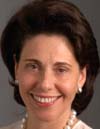
Merryl H. TischBeyond that, she has served on the boards of a wide variety of powerful not-for-profit groups, including the Metropolitan Council on Jewish Poverty, which she chairs, and the UJA Federation of New York.
“She has a passion for education and political street smarts that people have always underestimated because of her demure demeanor,” Randi Weingarten, the president of the United Federation of Teachers, told The New York Times.
“Merryl knows a lot of people, and she uses her access judiciously, but she uses it.”
Tisch did not grow up in affluence, but when she was 20, she married James Tisch, the son of Laurence A. Tisch, a self-made billionaire.
The elder Tisch, who died in 2003, and his brother, Robert, who died in 2005, started in real estate and hotels and then purchased Lowes Theaters. They added Lorillard Tobacco Co., Bulova Watch Co., CNA Financial (insurance) and an offshore drilling company.
The Tisch family also had a controlling interest in CBS from 1986 to 1995, and Robert was a co-owner of the New York Giants, as is his son, Steve Tisch, the film producer.
Laurence and Robert Tisch and their children may be best known for giving away money.
Evidence of their generosity is everywhere in New York City. There’s the Tisch School of the Arts at New York University, the Tisch Hospital at NYU Medical Center, the Tisch Galleries at the Metropolitan Museum of Art.
James and Merryl Tisch alone recently pledged $40 million to Mount Sinai Medical Center.
Merryl Tisch has been a member of the Board of Regents since 1996, and she served as vice chancellor before her election on April 1 as chancellor.
She will fill out the remaining year of Robert M. Bennett’s three-year term. Bennett, the former vice president and CEO of the United Way of Buffalo and Erie County, remains on the board.
According to the Associated Press, Merryl Tisch has contributed about $85,000 to political candidates in New York state.
Most of the money has gone to Democrats, including Assembly Speaker Sheldon Silver, Gov. David Paterson, when he was a state senator, and former Gov. Eliot Spitzer.
One of her first tasks as chancellor will be to lead the search for a new state education commissioner to replace Richard Mills, who leaves in June.
Click here to sign up for the Muckety Newsletter
Read related stories: Education · Recent Stories0 Comments
-
There are no comments yet, be the first by filling in the form below.
Leave a Comment
-
Commerce Secy Gary Locke is longtime advocate of Boeing, MicrosoftApril 10, 2009 at 8:49am
From the outset of his political career, Commerce Secretary Gary Locke was bullish about business.
Murtha seeks earmarks for PMA clients; Visclosky steers clear
Consider it a tale of two congressmen in the crosshairs.
One, Pennsylvania Democrat John P. Murtha, proudly embraces his ‘King of Earmarks’ nickname, and has requested dozens of new earmarks for 2010, including millions for former clients of the PMA Group, which shut its doors last month in the fallout over a federal probe into campaign finance irregularities. The lobby firm, which was founded by a former Murtha aide, had donated millions to Murtha’s campaigns.
Hint: Doubleclick on boxes with plus signs to expand, or click the tool bar at left for more options.
 MAP HINTS: Boxes with + signs can be expanded by doubleclicking. Solid lines are current relations. Dotted lines are former relations. For more options, right-click on a box or click on the map tools to the left. (Requires Flash)
The other, Indiana Democrat Peter J. Visclosky, another longtime ally of the PMA Group, released his earmark list late last week without a single request for a former PMA client. Visclosky also announced that he is returning donations from the defunct lobby firm – although so far, he has given away $18,000, just a fraction of the $369,750 he collected from the firm and its clients in 2007 and 2008, according to the New York Times.
The names of both lawmakers have repeatedly come up since the FBI raided the PMA Group’s offices last November, apparently on suspicions that founder Paul Magliocchetti had funneled donations to lawmakers through straw donors to circumvent campaign finance laws. The Justice Department has declined comment on its investigation of the firm. which specialized in winning earmarks and government contracts for clients such as Boeing, Lockheed Martin and MTS Technologies.
Murtha, a 76-year-old former Marine, chairman of the House Appropriations Committee and PMA’s best-known ally, insists he is not a target and that he has not hired a lawyer.
“I don’t have a clue what it’s all about,” he told the Pittsburgh Post-Gazette last month.
What Murtha says he does know is that without earmarks, “Johnstown [PA] would have been like Detroit is today. We would have been a ghost town.” At another point, he declared: “If I’m corrupt, it’s because I take care of my district.”
To that end, he has sought new earmarks for several companies once represented by PMA Group and which are located in his district, including Advanced Acoustic Concepts, Argon ST, MTS Technologies and Mobilvox.
“Every request is properly reviewed and vetted through a lengthy and thorough process,” he said in a note accompanying the entire earmark list.
Visclosky, 59, has taken the opposite tack, steering a wide berth around PMA Group clients, although in the past, he had also earmarked millions for them, and maintained a close bond with a former aide, Richard M. Kaelin, who became a PMA lobbyist. Visclosky is also a member of the Appropriations Committee.
After Murtha, Visclosky had been the No. 2 recipient of campaign contributions from the firm, according to the Center for Responsive Politics.
Sources told the Times that Visclosky was taking steps to prepare for legal scrutiny, including retaining lawyers to review his compliance with campaign finance laws.
Click here to sign up for the Muckety Newsletter
This post is tagged with: Advanced Acoustic Concepts, Argon ST, John Murtha, Lobbying, Mobilvox, MTS Technologies, Paul Magliocchetti, Peter J. Visclosky, PMA Group, Recent Stories, Richard M. KaelinRead related stories: Lobbying · Recent Stories0 Comments
-
There are no comments yet, be the first by filling in the form below.
Leave a Comment
-
Commerce Secy Gary Locke is longtime advocate of Boeing, MicrosoftApril 10, 2009 at 8:49am
From the outset of his political career, Commerce Secretary Gary Locke was bullish about business.
Alabama senators fire first salvo in battle over defense jobs
Even before Defense Secretary Robert Gates unveiled a sweeping reshaping of defense priorities Monday, the pushback from members of Congress had begun.
Late last week, Sens. Richard Shelby and Jeff Sessions, both Alabama Republicans, put a hold on the nomination of Harvard physicist Ashton Carter to become the Pentagon’s next acquisition chief in a spat with Gates over a $35 billion refueling tanker contract for the U.S. Air Force.
Hint: Doubleclick on boxes with plus signs to expand, or click the tool bar at left for more options.
 MAP HINTS: Boxes with + signs can be expanded by doubleclicking. Solid lines are current relations. Dotted lines are former relations. For more options, right-click on a box or click on the map tools to the left. (Requires Flash)
The senators demanded that Gates agree to make the decision on what tanker to buy on so-called best-value grounds – a criterion that would favor the larger, but more expensive aircraft offered by Airbus and Northrop Grumman, which have pledged to assemble the jetliners destined for tanker service at a plant in the senators’ home state of Alabama.

Ashton CarterBut Gates refused, saying the criteria for the new planes should be as simple and straightforward as possible so the Air Force acquires the best aircraft for the lowest cost, according to Defense News.
Any senator can place a hold on a confirmation, which then can freeze the entire process.
The holds came hours before the Senate was to have voted on Carter and two other defense department nominees, Jim Miller and Alexander “Sandy” Vershbow. While Carter was sidelined, Miller was confirmed as the Pentagon’s deputy policy chief, and Vershbow cleared to become the next assistant secretary of defense for international security affairs.
“I still have some unanswered questions about a commitment to a fair and open tanker competition,” Sessions said in a statement.
Gates will now have to wait at least until April 22 when Congress returns from recess for Carter’s nomination to be released.
But some fear that now that the defense secretary has laid out a budget that eliminates pet programs at almost every major U.S. defense contractor, other lamakers will join the fray to hold Carter’s nomination hostage in what could devolve into a series of petty battles to preserve their district’s programs.
Carter, like his prospective boss, has written extensively about the need to discipline the defense acquisitions process. A physicist as well as a defense policy expert, he was expected to bring fresh eyes, as well as a scientist’s insights, to the acquisition process.
Click here to sign up for the Muckety Newsletter
This post is tagged with: , Ashton Carter, Jeff Sessions, Northrup Grumman, Politics, Richard Shelby, Robert GatesRead related stories: Politics · Recent Stories1 Comments
-
You referred to the Northrop Grumman/EADS offering as “larger but more expensive”. But surprisingly, the larger more capable plane offered by Northrop Grumman/EADS and selected by the Air Force was actually less expensive than the Boeing plane.
Leave a Comment
-
Commerce Secy Gary Locke is longtime advocate of Boeing, MicrosoftApril 10, 2009 at 8:49am
From the outset of his political career, Commerce Secretary Gary Locke was bullish about business.
Sandy Weill pumps $170M into Weill Cornell Medical College
Sandy Weill isn’t finished yet.
By the time he is done with the latest chapter of his life, which has been devoted to philanthropy, the ‘House that Sandy Built’ may become shorthand for Cornell Medical College, rather than now-teetering Citigroup, the financial supermarket Weill created in 1998 by merging his company, Travelers, with Citicorp.
Hint: Doubleclick on boxes with plus signs to expand, or click the tool bar at left for more options.
 MAP HINTS: Boxes with + signs can be expanded by doubleclicking. Solid lines are current relations. Dotted lines are former relations. For more options, right-click on a box or click on the map tools to the left. (Requires Flash)
The New York Times reports that the 76-year-old billionaire has pledged $170 million to the Weill Cornell Medical College so that the university can proceed with plans to build a new medical research building by 2013.
The philanthropist, who serves as the chairman of the board, is widely credited with helping to turn the college into a world-class medical school since making his first donation in 1998. (The Cornell Daily Sun estimates that Weill, who graduated from Cornell in 1955, has given the university over $720 million, along with his wife, since 1998.)
Weill had arranged to give $250 million to the medical school upon his death. But Cornell’s president, David J. Skorton, apparently convinced him to produce the money now, even if the sum was smaller, when the university was navigating difficult times. The school’s $5.4 billion endowment has lost more than a third of its value since last June and donations are dramatically down.
“The statement we’re trying to make is that this is a really important time to give money, whatever it’s for,” Weill told the Times.
But as the paper also notes, Weill may be trying to burnish an uncertain legacy after the near-collapse of the company he had built into the largest financial institution in the world. The financial supermarket model that he championed has also been widely discredited.
Weill, who stepped down as Citigroup’s chairman nearly three years ago, said he has been disturbed by Citi’s declining fortunes (and his own, as a result), but was focusing his energies on philanthropy.
Besides their donations to Cornell, he and his wife, Joan, have also given large sums to Carnegie Hall, where he is chairman of the board, the Hebrew Home for the Aged and Alvin Ailey American Dance Theater Foundation. Slate Magazine named him the seventh largest charitable donor in America in 2007.
“Legacies are for other people to decide,” Weill told the Times. “But my activities in the not-for-profit center seem to have a lot more staying power than what I accomplished in the for-profit arena.”
Click here to sign up for the Muckety Newsletter
This post is tagged with: Citigroup, Cornell Medical College, Joan Weill, Philanthropy, Recent Stories, Sandy Weill, Weill Cornell Medical CollegeRead related stories: Philanthropy · Recent Stories0 Comments
-
There are no comments yet, be the first by filling in the form below.
Leave a Comment
-
Commerce Secy Gary Locke is longtime advocate of Boeing, MicrosoftApril 10, 2009 at 8:49am
From the outset of his political career, Commerce Secretary Gary Locke was bullish about business.
-
0 Comments
There are no comments yet, be the first by filling in the form below.
Leave a Comment