This post was archived from createpositivechange.org/. View the original on the Wayback Machine.
Author: muckety
-
Sergey Brin Donates Dna Dollars to Parkinsons Study
This post was archived from createpositivechange.org/. View the original on the Wayback Machine.
-
Sergey Brin donates DNA, dollars to Parkinson’s study
Google co-founder Sergey Brin, who carries a gene mutation that predisposes him to Parkinson’s disease, is contributing his DNA and millions of dollars to research into the condition’s genetic basis.
The study will be conducted by 23andMe, the website co-founded by his wife, Anne Wojcicki, which already harnesses users’ DNA to help them understand health risks and other genetic traits.
Hint: Click in map to explore connectionsStory continues below interactive map

 Click to activate interactive map
(requires Java)MAP HINTS: Click expands a name. Control+Click centers map on a name. Solid lines are current relations. Dotted lines are former relations. For advanced tools choose Tools > Options from the menu at top. More help. Not seeing the maps? Please go here to check for the latest version of Java.The site hopes to recruit 10,000 people with Parkinson’s. By comparing their genetic information with that of healthy people already in 23andMe’s growing database, researchers hope to find genetic variations linked to the neurological condition.
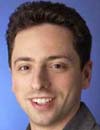
Sergey BrinPartners include the Michael J. Fox Foundation for Parkinson’s Research, which was started by the actor with the disease, and the nonprofit Parkinson’s Institute. About 1.5 million Americans have Parkinson’s, a progressive neurological disease which interferes with movement and speech.
Brin, 35, who Forbes ranks as the world’s 32nd richest person, told the New York Times that he would pay for most of the study’s costs, although he declined to say what that was.
“I kind of give myself 50-50 odds of getting Parkinson’s in 20 or so years, 25 years,” he said. “But I also give it a 50-50 shot of medicine catching up to be able to deal with it.”
Last fall, at Google’s Zeitgeist meeting, Brin revealed for the first time that his mother, Eugenia Brin, a former NASA computer engineer, had contracted Parkinson’s, and that he also carried the gene mutation that sharply increases his risk of developing the disease.
When a member of the audience asked whether it wouldn’t be better to be ignorant of such things, Brin appeared taken aback.
As a result of having that information, Brin said he was now in a position to encourage research about Parkinson’s and to take steps to lower his personal risk.
A profile in The Economist described his reaction as part and parcel of his approach to the world.
In effect, Brin said he regarded his mutation of LRRK2 as a bug in his personal code, and thus as no different from the bugs in computer code that Google’s engineers fix every day. By helping himself, he can therefore help others as well. By helping himself, he can therefore help others as well. He considers himself lucky.
The moment in some ways sums up Mr Brin’s approach to life. Like Mr. Page, he has a vision, as Google’s motto puts it, of making all the world’s information “universally accessible and useful.”
Brin’s faith in the transformative power of accessible information comes in part out of his family’s experience in the Soviet Union. His parents, Russian Jews, were barred from pursuing careers in physics and astronomy.
After his family emigrated to the U.S. when he was 6, Brin followed in his father’s and grandfather’s footsteps by studying mathematics at the University of Maryland, double-majoring in computer science.
He befriended fellow whiz kid Larry Page when he enrolled at Stanford to get a Ph.D in computer science. The two crammed their dorm room with computers and applied Brin’s data-mining system to build a superior search engine.
The program became so popular at Stanford that they suspended their doctoral studies to start Google in a rented garage, owned coincidentally by Wojcicki’s sister.
23andMe also grew out of Eugenia Brin’s diagnosis, according to the Times. Wojcicki, a biotech analyst, met co-founder Linda Avey because Avey was running a genetic study about Parkinson’s disease. Together, they came up with the idea of a website which would let people analyze and compare their genetic makeup (and whose name refers to the 23 pairs of chromosomes every human being carries).
Google already has invested $3.9 million in 23andMe, which is also based in Mountain View, CA.
Wojcicki told the Times she hopes to use the Parkinson’s study as a basis for future research collaborations. “There’s a huge opportunity for us if we can make research more efficient,” she said.
Click here to sign up for the Muckety Newsletter


This post is tagged with: 23andMe, Anne Wojcicki, Eugenia Brin, Google Inc., Internet, Linda Avey, Michael J. Fox Foundation for Parkinson’s Research, Parkinson’s Institute, Philanthropy, Sergey Brin
-
Edward Liddy caught in the eye of AIG stormMarch 15, 2009 at 9:42am
AIG has been described as the company where federal dollars go to die. It may also be a career killer for Edward M. Liddy.
Harvard Law Ensconced at 1600 Pennsylvania Ave
This post was archived from createpositivechange.org/. View the original on the Wayback Machine.
Harvard Law ensconced at 1600 Pennsylvania Ave.
To save on travel expenses, the Harvard Law School Class of 1991 might as well have its reunion this year at the White House.
The best-known graduate of the class, President Barack Obama, is both working and living there, and he’s shown no reluctance to hire his classmates.
Hint: Click in map to explore connectionsStory continues below interactive map
 Click to activate interactive map
(requires Java)MAP HINTS: Click expands a name. Control+Click centers map on a name. Solid lines are current relations. Dotted lines are former relations. For advanced tools choose Tools > Options from the menu at top. More help. Not seeing the maps? Please go here to check for the latest version of Java.Class of ‘91 members Cassandra Q. Butts and Norman Eisen are serving as deputy counsels to the president.
Their classmate Michael B.G. Froman is a deputy assistant to the president and deputy national security adviser for international economic security affairs.
David Kris, also ‘91, has been picked to head the National Security Division at the Department of Justice. And Thomas J. Perrelli, ‘91, has been nominated to be associate attorney general.
The 1991 graduates are just part of what the Harvard Law Record has called the “avalanche” of Harvard law alumni who have joined or are soon to join the Obama administration.
The best-known member of this group is Michelle Obama, the First Lady, and a 1988 Harvard Law graduate.
Daniel J. Meltzer, ‘75, and a professor at the law school during Obama’s time there, is the president’s principal deputy counsel.
Michael J. Gottlieb and Danielle Gray, 2003 graduates, are associate counsels to the president. Blake Roberts, Class of 2006, will be a deputy associate counsel.
Samantha Power, ‘99, is serving on the National Security Council. She won the Pulitzer Prize for general non-fiction in 2003 for A Problem from Hell: America and the Age of Genocide.
Power had been a professor at Harvard’s Kennedy School of Government, as well as an adviser (sometimes controversial) to the Obama presidential campaign.
Todd Stern, ‘75, is the special envoy for climate change.
And Jocelyn Frye, ‘88, a law school classmate and friend of Michelle Obama, is serving as director of policy and projects for the First Lady and as a deputy assistant to the president for domestic policy.
Obama has nominated Elena Kagan, Harvard Law ‘86, to be the U.S. solicitor general. Kagan was dean of the law school. David W. Ogden, ‘81, has been nominated to be deputy attorney general.
One Harvard Law School graduate and 1991 alum not working at the White House is Bradford A. Berenson, a Republican and a former associate White House Council in the George W. Bush administration.
While at Harvard, Obama and Berenson worked together at the Harvard Law Review, Obama serving as president, Berenson as Supreme Court Editor.
According to Berenson, Obama may have learned how to mediate competing factions while running a Law Review staff that was divided not only by politics but also by legal philosophies.
“You know who the people are who, despite their politics, can reach across and be friendly to and make friends with folks who have different views,” Berenson told Frontline on PBS last year. “And Barack very much fell into the latter category.”
Obama will probably feel right at home at cabinet meetings, as the room will be full of lawyers:
There’s Vice President Joe Biden (Syracuse Law), Attorney General Eric H. Holder Jr. (Columbia University), Secretary of Agriculture Tom Vilsack (Albany), Secretary of Homeland Security Janet Napolitano (University of Virginia), Secretary of the Interior Ken Salazar (Michigan) and Secretary of State Hillary R. Clinton (Yale University).
Gary Locke, the nominee to be secretary of commerce, graduated from Boston University Law School.
Click here to sign up for the Muckety Newsletter
-
Edward Liddy caught in the eye of AIG stormMarch 15, 2009 at 9:42am
AIG has been described as the company where federal dollars go to die. It may also be a career killer for Edward M. Liddy.
Madoffs Plea Leaves Many Unanswered Questions
This post was archived from createpositivechange.org/. View the original on the Wayback Machine.
Law School Friendship Brings Jocelyn Frye to the White House
This post was archived from createpositivechange.org/. View the original on the Wayback Machine.
Prince Charles Burnishes Green Credentials
This post was archived from createpositivechange.org/. View the original on the Wayback Machine.
Charges against Madoff leave many unanswered questions
Barring a change of heart, Bernard L. Madoff will plead guilty tomorrow to running a massive Ponzi scheme for at least a quarter century that defrauded thousands of people in virtually every corner of the globe.
Based on 11 charges unveiled for the first time last night, the disgraced financier would face a maximum sentence of 150 years in jail, and required restitution and fines of as much as $170 billion. That is the amount prosecutors believe moved through his accounts during the years he conducted the fraud, although there is no indication that Madoff has anywhere close to that sum.
Hint: Click in map to explore connectionsStory continues below interactive map
 Click to activate interactive map
(requires Java)MAP HINTS: Click expands a name. Control+Click centers map on a name. Solid lines are current relations. Dotted lines are former relations. For advanced tools choose Tools > Options from the menu at top. More help. Not seeing the maps? Please go here to check for the latest version of Java.Yet the criminal information leaves the biggest questions about the scam unanswered – whether family members and colleagues were involved, where most of the money went, and what, if any, knowledge those running several large feeder funds may have had.
Lev L. Dassin, the acting United States attorney in Manhattan, said Tuesday that his staff was still unraveling the fraud to determine who besides Madoff might have helped.
“The filing of these charges does not end the matter,” Dassin said in a statement.
Dassin said he has made no agreement to seek leniency in return for Madoff’s guilty plea or his cooperation in the investigation.
The prosecutor’s release of charges offered some fresh information about how they believe Madoff conducted his scam. For starters, they up the total pricetag from his $50-billion estimate to nearly $65 billion – the amount that thousands of customers believed they had in their accounts at the time of his arrest.
And they date the fraud to as far back as the early 1980s, when they allege that Madoff assembled an ill-trained and inexperienced clerical staff, directed them to “generate false and fraudulent documents,” told lies and supplied phony records to regulators and shuffled hundreds of millions of dollars from bank to bank to create the illusion of active trading, according to the criminal information.
For the first time, they disclose that some investors were treated differently – a select group were offered returns as high as 45 percent, according to the criminal information
And they raise questions about the supposed separation between Madoff’s 17th-floor investment operation and the supposedly legitimate wholesale stock trading operation that his sons ran. Prosecutors charge that from at least 2002 through 2008, more than $250 million from investors in the Ponzi scheme was transferred into the operations of those other businesses.
They also allege that Madoff transferred money from his firm’s London office “to purchase property and services for the personal use and benefit” of himself, his family members and associates.
Madoff has been free on $10 million bail, but confined to his apartment, since his arrest in December. It is not clear whether the government will seek to have his bail revoked if he pleads guilty on Thursday.
The charges against him include securities fraud, investment adviser fraud, mail fraud, wire fraud, three counts of money laundering, false statements, perjury, false filings with the U.S. Securities and Exchange Commission, and theft from an employee benefit plan.
Even if Madoff pleads guilty as expected, the judge said he will not be sentenced for several months.
Click here to sign up for the Muckety Newsletter
This post is tagged with: , Bernard L. Madoff, Bernard L. Madoff Investment Securities, Madoff, Recent StoriesRead related stories: Madoff · Recent Stories0 Comments
-
There are no comments yet, be the first by filling in the form below.
Leave a Comment
-
Harvard Law ensconced at 1600 Pennsylvania Ave.March 12, 2009 at 11:55am
To save on travel expenses, the Harvard Law School Class of 1991 might as well have its reunion this year at the White House.
Chas Freeman Withdraws As Intel Chief
This post was archived from createpositivechange.org/. View the original on the Wayback Machine.
Eli Broad Still Interested in La Newspaper
This post was archived from createpositivechange.org/. View the original on the Wayback Machine.
K Street Woos Howard Dean Other Democrats
This post was archived from createpositivechange.org/. View the original on the Wayback Machine.
Eli Broad still mulls saving newspapers
Is Eli Broad considering another run at the Los Angeles Times?
The billionaire philanthropist told a New York gathering Monday that he’d still like to rescue the paper, owned by the bankrupt Tribune Company.
Hint: Click in map to explore connectionsStory continues below interactive map
 Click to activate interactive map
(requires Java)MAP HINTS: Click expands a name. Control+Click centers map on a name. Solid lines are current relations. Dotted lines are former relations. For advanced tools choose Tools > Options from the menu at top. More help. Not seeing the maps? Please go here to check for the latest version of Java.“We can’t afford to lose good newspaper journalism, investigative reporting,” the 75-year-old business maven said during a lecture on business and philanthropy at the 92nd Street Y, according to Reuters..
Back in 2007, Broad had expressed interest in buying the Los Angeles paper – before real-estate magnate Sam Zell took the entire company private in an $8-billion deal that loaded the company with debt.
“I’ve regained my sanity since then,” Broad joked, but added: “I would like to see our foundation and others join together to own the LA Times.”
Like most American newspapers, the Los Angeles Times has struggled with steep advertising declines and a migration of readers to the Internet. Since its parent company filed for bankruptcy several months ago, the paper has made ever more draconian cuts.
Broad’s background is in home building and insurance. He sold SunAmerica, a provider of retirement products, to AIG in 1999 for $18 billion. In recent years, he and his wife have devoted themselves to philanthropy, including revitalizing downtown Los Angeles, bankrolling modern art collections and improving K-12 public education.
Recently, they pledged $100 million to create a new medical institute dedicated to human genome research, to be run by Harvard and the Massachusetts Institute of Technology.
Still, Broad said he didn’t pretend to know how to make the Times profitable again. “No one has figured out a good business model as of yet,” he said.
Reducing profit expectations might be one solution, he said. “Newspapers ought to be owned by foundations, not look for great financial returns.”
And he suggested that while the Times might not survive as a national newspaper, it could partner with other papers like the Washington Post to produce national stories.
Broad pointed to Britain’s Guardian as one business model. That paper is owned by the Scott Trust Limited, a nonprofit foundation which was created in 1936 to protect the legacy of longstanding editor and former owner, C.P. Scott.
“If several foundations are involved, there is likely to be journalistic freedom,” Broad said.
Click here to sign up for the Muckety Newsletter
This post is tagged with: , Eli Broad, Los Angeles Times, Newspapers, Recent Stories, Sam Zell, SunAmerica, the Broad Art foundation, the Eli and Edythe Broad Foundation, TribuneRead related stories: Newspapers · Recent Stories0 Comments
-
There are no comments yet, be the first by filling in the form below.
Leave a Comment
-
Harvard Law ensconced at 1600 Pennsylvania Ave.March 12, 2009 at 11:55am
To save on travel expenses, the Harvard Law School Class of 1991 might as well have its reunion this year at the White House.
Chas Freeman withdraws name for Intel chief
Veteran diplomat Chas W. Freeman Jr. has removed himself from consideration to head the National Intelligence Council as a result of criticism of his remarks about Israel and his entanglements with Saudi Arabia and China.
His withdrawal came hours after National Intelligence Director Dennis Blair had defended his qualifications to a Senate intelligence panel. Lawmakers have no power to reject him, but all seven Republicans on the panel had sent a letter to Blair expressing concerns about Freeman’s experience and objectivity.
Hint: Click in map to explore connectionsStory continues below interactive map
 Click to activate interactive map
(requires Java)MAP HINTS: Click expands a name. Control+Click centers map on a name. Solid lines are current relations. Dotted lines are former relations. For advanced tools choose Tools > Options from the menu at top. More help. Not seeing the maps? Please go here to check for the latest version of Java.“He has no intelligence experience,” said committee member Orrin Hatch (R-Utah).
Sen. Chuck Schumer, a New York Democrat, released a statement late Tuesday that also seemed to take credit for getting the White House to “reject” Freeman’s appointment.
“Charles Freeman was the wrong guy for this position,” Schumer said. “His statements against Israel were way over the top and severely out of step with the administration. I repeatedly urged the White House to reject him, and I am glad they did the right thing.”
The chairman of the National Intelligence Council is responsible for producing the National Intelligence Estimate – the classified document given to the president and senior intelligence officials that analyzes threats to U.S. security.
Freeman, 66, would have brought his experience as a former ambassador to Saudi Arabia, a former assistant defense secretary and a China expert who served as principal translator for the late Richard Nixon on his groundbreaking 1972 trip.
Opposition to his appointment centered on his outspoken criticisms of Israel’s handling of the Palestinian conflict and his harsh analysis of the Bush administration’s foreign policy. He had also enraged human rights advocates with his defense of the Chinese government’s crackdown on dissidents in Tiananmen Square in 1989.
Freeman has headed the Middle East Policy Council, which critics have called “a mouthpiece for Saudi Arabia” because of its funding from the Saudi royal family. His role on a board for the Chinese National Offshore Oil Corporation, which has a $16-billion agreement to develop a gas field in Iran, also raised questions.
The inspector general for the national intelligence director agreed last week to examine Freeman’s foreign ties. At the time, Blair said the inquiry would put questions about him to rest.
Blair’s office said he had not sought White House approval for the appointment, which did not require Senate approval.
Freeman put out his own statement last night, saying he made the decision to withdraw after concluding “the barrage of libelous distortions of my record would not cease upon my entry into office.”
He also took a swipe at the Israel lobby which he blamed for the campaign against him.
“The libels on me and their easily traceable email trails show conclusively that there is a powerful lobby determined to prevent any view other than its own from being aired, still less to factor in American understanding of trends and events in the Middle East,” he said. “The tactics of the Israel Lobby plumb the depths of dishonor and indecency and include character assassination, selective misquotation, the willful distortion of the record, the fabrication of falsehoods, and an utter disregard for the truth.”
Click here to sign up for the Muckety Newsletter
This post is tagged with: Barack Obama, Chas W. Freeman Jr., Dennis Blair, Middle East Policy Council, Orrin Hatch, Politics, Recent Stories, Saudi ArabiaRead related stories: Politics · Recent Stories0 Comments
-
There are no comments yet, be the first by filling in the form below.
Leave a Comment
-
Harvard Law ensconced at 1600 Pennsylvania Ave.March 12, 2009 at 11:55am
To save on travel expenses, the Harvard Law School Class of 1991 might as well have its reunion this year at the White House.
K Street woos Howard Dean, other Democrats
Only a few years ago, Democrats feared being frozen out of Washington’s lucrative lobby world.
Republicans, who controlled the White House and Congress, had launched the so-called ‘K Street Project’ to pressure companies, lobby firms and trade groups to hire only Republicans for top influence-peddling jobs.
Hint: Click in map to explore connectionsStory continues below interactive map
 Click to activate interactive map
(requires Java)MAP HINTS: Click expands a name. Control+Click centers map on a name. Solid lines are current relations. Dotted lines are former relations. For advanced tools choose Tools > Options from the menu at top. More help. Not seeing the maps? Please go here to check for the latest version of Java.But times have changed: With Democrats ensconced in the White House and both houses of Congress, it is their operatives who are now being snapped up. And make no mistake: Bidding wars are occurring over folks with the right connections – people like former Democratic National Chairman Howard Dean, Obama campaign political director Matthew Nugen and Michael Paese, former deputy director of the House Financial Services Committee.
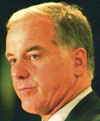
Howard DeanNo matter Barack Obama’s promise to reduce the influence of lobbyists. No matter the tanking economy.
“Barack Obama campaigned on change. Well, change is good for the lobbying business,” Ed Rogers, a former aide to President Ronald Reagan and now chairman of BGR Group, formerly Barbour, Griffith & Rogers, told the Washington Post. “People will need the expertise and guidance more in the next year than they have in the last five.”
After all, corporate clients who will be affected by Obama’s plans on energy, health care or taxes need people who know what’s on the table and how to become part of the discussion. Others are eager to get a piece of the economic stimulus bill.
And in the words of one seasoned Hill player, access is the key to power in Washington. And to get it, you need people who know the people in charge.
Consider these recent hires:
- Dean, the former DNC chairman, Vermont governor and presidential candidate, who once disparaged John McCain as “a guy who is very close to the lobbyist community,” has signed on with law and lobbying mega-firm McKenna Long & Aldridge as a consultant.
- Nugen, Obama’s former political director and a veteran Democratic operative, is now a “strategic adviser” with Ogilvy Government Relations.
- Jeff Berman, who directed Obama’s national delegate operation, has joined Bryan Cave as “of counsel.”
- Brian Wolff, the executive director of the House Democratic campaign committee and longtime political director to Speaker Nancy Pelosi, accepted a top position at the Edison Electric Institute (EEI), an investor-owned utility trade group which fought climate-change regulation in the past.
- Paese, who had been an aide to Massachusetts Democrat Barney Frank, and the deputy director of the House Financial Services Committee, became executive vice president of the Securities Industry & Financial Markets Association, the trade group.
- Jaime R. Harrison, who helped mobilize voter turnout for Obama in South Carolina, and for the past two years directed floor operations for House Majority Whip James E. Clyburn (D-S.C.), now with the Podesta Group.
- Patrick Von Bargen, a former chief of staff to Sen. Jeff Bingaman (D-N.M.) and aide to William Donaldson, the former chairman of the Securities and Exchange Commission, went to Quinn Gillespie.
The lure of big salaries goes a long way to explaining the divide between campaign rhetoric and actual practice. So does a title that sidesteps the dread ‘L’ word.
David Kirkpatrick of the New York Times actually put a pricetag on the partisan transformation of the capital: Three years ago, an assistant department secretary leaving the Bush administration – with Republicans in control of the House, Senate and White House – might have fetched as much $600,000 to $1 million a year as a lobbyist, he quoted recruiters. That same person might now expect less than half as much.
But for Democrats, the bidding is fierce. Three years ago, a Democratic staff director for an important House or Senate committee might have earned about $130,000 a year on Capitol Hill, and jumped to K Street for an annual salary of about $250,000. Now, the same person might command as much as $500,000 to $800,000 a year, several recruiters said.
… For an industry that prefers to talk about selling policy expertise and sophisticated arguments, the turnabout is a stark reminder that what clients want are personal connections. “People who need to get something done know what the price of a drink is,” said Peter Metzger, vice chairman of the recruiting firm CT Partners. “This may sound terribly Washington, but access trumps expertise.”
It certainly makes a difference that many of the issues Obama has zeroed in on, such as health-care policy, energy and taxes, have implications for some of the lobbying world’s most free-spending corporate clients.
Von Bargen told the Washington Post that he joined Quinn Gillespie with the expectation that his knowledge of clean energy issues would be a strong asset.
“People who have labored in Democratic vineyards for years are familiar with the people involved, but also with the substantive issues, and how Democrats approach those issues,” he said.
Laura Sheehan, who recently became vice president of marketing and communications for the American Gas Association, had been policy director at the Democratic Congressional Campaign Committee, and a top aide to Rep. John D. Dingell (D-Mich.).
“After the last election, when the House flipped, I got three to four serious job inquiries on election night just because of my party background,” she told the Post.
She did not take any of those positions then, but when the same thing happened again this year., decided to give it a shot.
Click here to sign up for the Muckety Newsletter
This post is tagged with: American Gas Association, Barack Obama, BGR Group, Brian Wolff, Bryan Cave, Ed Rogers, Edison Electric Institute, Howard Dean, Jamie harrison, Jeff Berman, Laura Sheehan, Lobbying, Matthew Nugen, McKenna Long & Aldridge, Michael Paese, Ogilvy Government Relations, Patrick Von Bargen, Podesta Group, Quinn GillespieRead related stories: Lobbying · Recent Stories1 Comments
-
All spending bills in the Stimulus or Omnibus bill to assist jobless American Workers seem insignificant, when Democratic leaders left in a giant loophole so millions of ILLEGAL ALIENS can steal jobs? Of course Democrats are wooing K Street, because that where they fill their pockets with campaign contributions. Sen. Bingaman (D.NM) has joined the Democratic leaders in stripping E-Verify.
REMEMBER THESE NAMES..?
Sen.Harry Reid (D-NV) arch enemy of American workers, committed the ultimate sin today Reid and 49 Democrats blocked E-Verify in the Senate. Their disloyal actions shall be well remembered, when the grovel for re-election. They condemned hundreds of thousands in the construction industry, having to compete over jobs. Parasites are organisms that live of a host and that is what contractors will do, when they look for the cheapest labor they can find. Starting with the stimulus, then followed by the Omnibus spending plan this Senators blocked E-Verify.
Akaka (D-HI) Inouye (D-HI),Begich (D-AK),Bennet (D-CO) Udall (D-CO),Bingaman (D-NM) Udall(D-NM),Boxer (D-CA) Feinstein (D-CA),Brown (D-OH),Burris (D-IL) Durbin (D-IL),Byrd (D-WV) Rockefeller (D-WV),Cantwell (D-WA) Murray,(D-WA),Cardin (D-MD) Mikulski (D-MD),Carper (D-DE) Kaufman (D-DE),Casey (D-PA),Conrad (D-ND) Dorgan (D-ND),Dodd (D-CT) Lieberman.
Here’s more Senators who killed E-Verify Here’s more (ID-CT),Feingold (D-WI) Kohl (D-WI),Gillibrand (D-NY) Schumer (D-NY),Hagan (D-NC),Harkin (D-IA),Johnson (D-SD),Kerry (D-MA),Landrieu (D-LA),Shaheen (D-NH),Leahy (D-VT) Sanders (I-VT),Levin (D-MI) Stabenow (D-MI),Lincoln (D-AR) Pryor (D-AR),Menendez (D-NJ) Lautenberg (D-NJ),Merkley (D-OR) Wyden (D-OR),Nelson (D-FL),Reed (D-RI) Whitehouse (D-RI),Reid (D-NV) and Warner (D-VA).
They sold the American Worker out for campaign money from corporate lobbyists and open border fanatics. In this miserable time of unemployment and uncertainty from the janitor, to the computer programmer you will be REMEMBERED. You will not escape your insult to the American worker, who depends on your honesty to vote on their behalf. You have now proved the dimensions of how far you will go, to keep the illegal alien invasion crossing our borders, overstaying their ship or plane visa.
The corruption so deeply instilled in the Washington elite. ASK JUDICIALWATCH? The billions of tax dollars taken from every, man, woman and child, to support the welfare of illegal aliens. Like Pearl harbor we will not forget the traitors who swore to uphold their allegiance to THE PEOPLE.
Leave a Comment
-
Anna Nicole Smith’s boyfriend, doctors charged in drug caseMarch 13, 2009 at 1:11pm
More than two years after the death of his girlfriend, Anna Nicole Smith, Howard K. Stern has been formally charged with conspiring to furnish drugs to the former Playboy star.
Madoff Aide Said to Have Created Bogus Trading Tickets
This post was archived from createpositivechange.org/. View the original on the Wayback Machine.
Madoff aide said to have ordered up fake trading tickets
Fresh details about the alleged billion-dollar Ponzi scheme run by Bernard L. Madoff are emerging as the accused swindler prepares for a possible guilty plea in federal court Thursday.
Annette Bongiorno, a longtime aide to Madoff, allegedly instructed two assistants to create trading tickets, now believed to be bogus, using research of daily share prices for blue-chip stocks, the Wall Street Journal reported today.
Hint: Click in map to explore connectionsStory continues below interactive map
 Click to activate interactive map
(requires Java)MAP HINTS: Click expands a name. Control+Click centers map on a name. Solid lines are current relations. Dotted lines are former relations. For advanced tools choose Tools > Options from the menu at top. More help. Not seeing the maps? Please go here to check for the latest version of Java.The “tickets” would show purported trades that Madoff made, which were in line with the annual profit reports Madoff issued to investors.
The information comes from two assistants who were interviewed by federal authorities last month through so-called proffer agreements, in which prosecutors agree not to use their statements against them as long as they tell the truth, according to the Journal.
Such fact-gathering doesn’t mean that prosecutors will determine there was any criminal liability. To date, no one save for Madoff has been charged with a crime. The Journal report notes that large-scale fraud investigations often begin with lower-level employees to find out what they knew about the work of their supervisor or other managers, then continue to climb up the ladder
Bongiorno, 60, was once Madoff’s personal secretary and later oversaw some of the firm’s oldest accounts.
The role of another Madoff employee, chief financial officer Frank DiPascali, is also being examined as part of the ongoing probe, the Journal reports.
Bongiorno and DiPascali were longtime neighbors in the Howard Beach neighborhood of Queens, and she is said to have introduced him to Madoff, according to a Bloomberg News report.
.
Click here to sign up for the Muckety Newsletter
This post is tagged with: Annett Bongiorno, Bernard L. Madoff, Bernard L. Madoff Securities Investment, Frank DiPascali, Madoff, Recent StoriesRead related stories: Madoff · Recent Stories0 Comments
-
There are no comments yet, be the first by filling in the form below.
Leave a Comment
-
Harvard Law ensconced at 1600 Pennsylvania Ave.March 12, 2009 at 11:55am
To save on travel expenses, the Harvard Law School Class of 1991 might as well have its reunion this year at the White House.
Madoff to Face His Victims in Court
This post was archived from createpositivechange.org/. View the original on the Wayback Machine.
-
1 Comments
#1. MURALIDHARA ACHARYA 03.14.2009
Mr. Brin is doing a commendable job. Any way, I would like to give him piece of my mind. If he undertook this to include developing or under developed nations this would have made more sense.
Best,
Muralidhara Acharya
Leave a Comment