This post was archived from createpositivechange.org/. View the original on the Wayback Machine.
Tag: Barack Obama
-
Cecile Richards gives John McCain a send-up to make her mother proud
With all the talk of political dynasties passing the torch – or being shoved out of the way – little attention has been paid to another Democratic scion who shared the stage with Hillary Clinton last night.
Her name is Cecile Richards. And like her mother, the late Democratic matriarch and Texas Gov. Ann Richards, she is a powerful, in-your-face speaker who drives home political points with wit and, often, raunch.
Hint: Click in map to explore connectionsStory continues below interactive map

 Click to activate the interactive map (requires Java)MAP HINTS: Click expands a name. Control+Click centers map on a name. Solid lines are current relations. Dotted lines are former relations. For advanced tools choose Tools > Options from the menu at top. More help. Not seeing the maps? Please go here to check for the latest version of Java.
“Elections are about choices, and Mom would have said that women voting for John McCain would be like chickens choosing to vote for the Colonel,” Richards wrote in a recent column on Huffington Post.
Now president of the Planned Parenthood Federation of America, Richards spent her time last night excoriating John McCain’s record on women’s health issues.
“John McCain has voted against women’s health care 125 times,” she said. “You can look it up: he voted against real sex education, against affordable family planning and, if elected, John McCain has vowed to appoint Supreme Court justices who will overturn Roe v. Wade.”
Richards also recalled her mother’s sharp-tongued appraisal of then vice-president George H.W. Bush at the 1988 Democratic National Convention.
“Poor George,” Ann Richards had said then. “He can’t help it. He was born with a silver foot in his mouth.”
(Six years later, Ann Richards would be defeated by George W. Bush in her gubernatorial re-election campaign in Texas. She died from esophageal cancer in September, 2006.)
By all accounts, Cecille Richards is a chip off her mother’s block.
A 2004 Texas Monthly profile described her as ” a striking six-footer and longtime labor organizer with a bright, explosive laugh who can stop a room when she walks into it just as her mother can.”
She told the magazine how her involvement in politics was all but inevitable after growing up stuffing political mailings, learning precinct politics, and hosting anti-war rallies.
“Other families did bowling,” she said. “We did politics.”
Besides her mother’s involvements, her father, David Richards, was a labor lawyer involved in civil rights, among other issues.
“We represented every union in the South,” David Richards told Texas Monthly. “Teamsters and garment workers, plumbers and pipe fitters.”
For entertainment, the family would sit around in the evening, singing old union songs like “Joe Hill.”
After graduating from Brown in 1980, Cecile Richards worked as a union organizer, first among garment workers in the Rio Grande Valley, then with hotel workers in New Orleans and janitors in Los Angeles. Her work directing the Justice for Janitors campaign was dramatized by Adrien Brody in the movie Bread and Roses.
In 1982, Richards met her husband, Kirk Adams, also a labor organizer and now chief of staff of the Service Employees International Union, the largest union in America. The couple, who had three children, moved back to Texas in 1990 so they could work on Ann Richard’s campaign.
Her mother’s defeat in 1994 was what led Cecile Richards to refocus her energies on electoral politics.
After the loss, Richards founded a grassroots organization called the Texas Freedom Network. The idea was to oppose the influence of conservative Christians in Texas politics, particularly in the election of school boards.
Despite importunings to go into electoral politics, Cecile Richards followed her husband back to Washington in the late 1990s, and went to work for Ted Turner “to help build the infrastructure of the choice movement in America,” as she described it.
In 2002, she became deputy chief of staff for Democrat Nancy Pelosi, of California, who had just become minority whip in Congress and was about to become minority leader. Eighteen months later, she left that job to become president of a new organization, America Votes, a coalition of several dozen progressive groups intent on turning out the Democratic vote in 2004.
That was the position from which Planned Parenthood recruited her in 2005. Richard had no health background, but brought the steely resolve, as well as the rolodex, of a seasoned political operative.
“Listen, the reason I took this job is, I feel like we need to go into the 21st century,” she told the Washington Post in 2006. “Clearly, with some folks in the country, we’re going to get there kicking and screaming.”
Under Richards’ leadership, the group has been an unabashed presence at the convention. Volunteers have been stationed outside the Pepsi Center, handing out over 700 pounds of pink-papered condoms labeled “Protect Yourself from John McCain.”
-
Joe Biden is Obama’s pick for vice president
Barack Obama obviously didn’t choose Joe Biden as his running mate to gain electoral votes. Delaware has just three.
And he didn’t tap Biden for geographical balance. Two northerners now head the Democratic ticket.
Hint: Click in map to explore connectionsStory continues below interactive map
MAP HINTS: Click expands a name. Control+Click centers map on a name. Solid lines are current relations. Dotted lines are former relations. For advanced tools choose Tools > Options from the menu at top. More help. Not seeing the maps? Please go here to check for the latest version of Java.But the addition of the veteran senator with extensive foreign relations background and a trumpeted tendency to speak his mind means that the two can now assume the roles of good candidate/bad candidate.
Biden, chairman of the Senate Foreign Relations Committee, is in prime position to criticize McCain’s stands on foreign policy, homeland security and defense. Already, he is being called Obama’s “attack dog.”
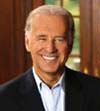
Joe BidenThe Obama camp announced Biden’s selection by text message at 3 a.m. The two men are scheduled to appear together at a rally in Springfield, IL, at 3 p.m.
Biden has run twice for the White House, in 1988 and 2008. During his most recent campaign, which ended after a poor showing in Iowa, Biden critized Obama as being inexperienced and “not yet ready” for the White House.
The McCain camp seized on this today.
“There has been no harsher critic of Barack Obama’s lack of experience than Joe Biden,” McCain spokesman Ben Porritt told The New York Times. “Biden has denounced Barack Obama’s poor foreign policy judgment and has strongly argued in his own words what Americans are quickly realizing — that Barack Obama is not ready to be president.”
At age 65, 18 years older than Obama, Biden has extensive experience on Capitol Hill, having served six terms in the Senate.
He has also endured many personal tragedies. Soon after his election to the Senate, his wife and daughter were killed in a car crash. Five years later, he remarried. He also has survived two brain aneurysms.
His son Beau, Delaware attorney general and a captain in the Army National Guard, is scheduled to be deployed to Iraq in October.
In the midst of recent spats between the campaigns about who’s wealthier and more elite, Biden is one of the few non-millionaires in the Senate. Having been elected at age 29, he has spent most of his adult life in public office.
Last year he reported his assets were between $62,000 and $405,000, and his liabilities were between $140,000 and $365,000.
Click here to sign up for the Muckety Newsletter
-
Oprah Winfrey + Barack Obama = 1 million votes (Muckety)
What’s the value of a celebrity endorsement in a political campaign?
In the case of Oprah Winfrey and Barack Obama, about a million votes.
Hint: Click in map to explore connectionsStory continues below interactive map
 Click to activate the interactive map (requires Java)MAP HINTS: Click expands a name. Control+Click centers map on a name. Solid lines are current relations. Dotted lines are former relations. For advanced tools choose Tools > Options from the menu at top. More help. Not seeing the maps? Please go here to check for the latest version of Java.
That’s the conclusion of two University of Maryland economists who correlated vote totals with data such as subscriptions to O magazine and purchases of books endorsed by Oprah’s Book Club. They found a close relation in many polling precincts between O subscribers and Obama backers.
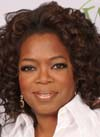
Oprah Winfrey“We think people take political information from all sorts of sources in their daily life,” Moore told The New York Times. “And for some people Oprah is clearly one of them.”
Economists Craig Garthwaite and Timothy Moore tracked celebrity endorsements back to the 1920 presidential campaign and concluded that Winfrey was “a celebrity of nearly unparalleled influence.”
Although she has not confirmed any plans to attend the Democratic National Convention in Denver, Winfrey has reportedly rented a Colorado home for $50,000 per week.
Other celebrities expected to participate in the convention include Gwyneth Paltrow, Madonna, Spike Lee, Warren Beatty, Susan Sarandon, Forrest Whitaker, Scarlett Johansson and Kanye West.
Stevie Wonder, Melissa Etheridge, Sheryl Crow and the Black Eyed Peas are scheduled to perform at convention- related events.
Obama already owes much to the stars – and not only to Oprah. Gwyneth Paltrow produced a video backing the campaign and Hollywood fundraisers have contributed more than $4 million to his campaign.
Click here to sign up for the Muckety Newsletter
Is Tim Kaine too much like Barack Obama to be VP choice?
There’s been much speculation this week that Virginia Gov. Tim Kaine may be “very, very high” on Barack Obama’s VP shortlist, as Politico has described it.
We have no insider knowledge of the vetting process, but the parallels between Kaine and Obama – both of whom are Harvard-educated attorneys with Kansas roots and a civil rights orientation – help explain their unusual chemistry. But those similarities could also prove a liability for the Democratic ticket.
Hint: Click in map to explore connectionsStory continues below interactive map
 MAP HINTS: Click expands a name. Control+Click centers map on a name. Solid lines are current relations. Dotted lines are former relations. For advanced tools choose Tools > Options from the menu at top. More help. Not seeing the maps? Please go here to check for the latest version of Java.
Like Obama and his wife, both Kaine and his wife, Anne Holton, a lawyer and former judge, graduated from Harvard Law School. Holton and Michelle Obama also attended Princeton, although at different times.
That background no doubt attests to both couples’ smarts, but at a time when so many Americans are wary of intellectual achievers whom they see as elitists, the notion of four Harvard-educated lawyers in the White House may not play well in some quarters. (Perhaps that’s why The New Republic has posted a video of Kaine riffing on a harmonica with a blue-grass band as evidence he might cut it with regular folks.)
Kaine, 50, an early Obama supporter, also shares Obama’s preoccupation with civil rights. After graduating from Harvard, Kaine had a law practice specializing in representing people who had been denied housing opportunities because of race or disability. He also taught legal ethics for six years at the University of Richmond Law School.
Like the presumptive Democratic nominee, he boasts of a bipartisan orientation, an assertion that owes less to his record in the Virginia statehouse than the fact that his father-in-law, Linwood Holton, was the state’s Republican governor from 1970 to 1974.
Howard Fineman over at MSNBC points out that Holton, who is about to turn 85, remains a hero to liberal Democrats and African Americans in the Old Dominion.
Back in the 1970s, when public school busing and racial integration was creating a new faction of the GOP — one appealing to the fears and prejudices of working-class white southerners — Holton stood his ground.
As governor of Virginia, he sent his children, including his daughter, Anne, to public schools in Richmond to prove his point.The political friendship between Kaine and Obama is said to have begun shortly after Obama spoke before the Democratic convention in 2004. At Kaine’s invitation, Obama came to Virginia to campaign for him in 2005 as he ran for governor.
Kaine reciprocated last year by becoming the first prominent elected official outside of Illinois to endorse Obama for president.
It may be relevant too, as Fineman suggests, that the two men share a political consultant – the Benenson Strategy Group whose founder, Joel Benenson is advising Obama. The group’s principal consultant, Peter Brodnitz, who gained his reputation handling Sen. Jim Webb of Virginia, is advising Kaine.
Kaine does bring some things to a Democratic ticket that Obama lacks. A practicing Catholic who spent close to a year working as a missionary in Honduras, Kaine would presumably appeal to swing Catholic voters, even though political scientist Larry Sabato points out, “he is pro-choice in effect while projecting a pro-life image and accepting of the death penalty despite personal opposition to it.”
Kaine is also fluent in Spanish and would presumably appeal to growing numbers of Latino voters.
Most critically, if he could help Obama win Virginia, which has voted Republican in 13 of the last 14 presidential contests, that could give Obama a decisive Electoral College advantage, according to Sabato.
On the negative side, however, those skeptical of Obama’s readiness to lead the nation may feel the same way about Kaine. With scant background in military and foreign policy, in particular, Kaine would be unlikely to reassure those who have trouble seeing Obama as commander in chief.
Although Kaine has more executive experience than Obama as a sitting governor and a former mayor of Richmond, many pundits there say his record of achievement as a state leader is mixed, in part because he has been unable to move much through a Republican-controlled state legislature.
Finally, as someone relatively new to the Big Leagues, he could hammer away at the Democrats’ change theme – but that would cut both ways since he has little national name recognition.
Which is to say, he might be “Obama squared “– a smart, charismatic and a formidable campaigner, but without enough of a track record to make his promise of change seem credible.
Here’s a taste of Kaine on the harmonica:
Click here to sign up for the Muckety Newsletter
Chesapeake Energy and Aubrey McClendon, masters of the power play
Chesapeake Energy CEO Aubrey McClendon has a former Oklahoma governor (Frank Keating) and U.S. senator (Don Nickles) on his Oklahoma City-based company’s board of directors. That seems only fitting. McClendon’s great uncle, Robert S. Kerr, co-founded Kerr-McGee and served as Oklahoma governor and senator.
Hint: Click in map to explore connectionsStory continues below interactive map
MAP HINTS: Click expands a name. Control+Click centers map on a name. Solid lines are current relations. Dotted lines are former relations. For advanced tools choose Tools > Options from the menu at top. More help. Not seeing the maps? Please go here to check for the latest version of Java.These are boom times for Chesapeake, founded by McClendon – whose middle name is Kerr – and Tom Ward in 1989 with an initial investment of $50,000. The company went public in 1993. After some rough going, its stock price has increased fiftyfold since.
Chesapeake is currently the nation’s third largest producer of natural gas, but McClendon predicts it will be No. 1 by the end of the year. He told shareholders at the company’s annual meeting last month that the Haynesville Shale field in Louisiana and Northeast Texas could be the company’s most significant field ever.
“We are really off to the races in that play,” he said.
Last week, the company announced a $3.3 billion joint venture with Plains Exploration & Production Co. that values Chesapeake’s holdings in the Haynesville region at $30,000 an acre, more than six times what it paid.
The company is also the biggest player in the Barnett Shale region around Fort Worth, where it has employed actor Tommy Lee Jones to tout the benefits of natural gas in radio, TV, newspaper and billboard advertising.
“The Barnett Shale is a national treasure that will benefit all Texans for generations,” the actor says in a TV spot.
Star-Telegram columnist Mitch Schnurman points out that McClendon has a “history of funding aggressive public-opinion campaigns.” He supported the Swift Boat campaign against John Kerry, defended the Duke (his alma mater) lacrosse team against rape accusations and fought the construction of coal power plants in Texas.
Coal is a cheaper fuel to use to generate electricity but natural gas is cleaner.
Chesapeake’s main business strategy is to “grow through the drillbit,” meaning exactly what it says. The company claims to have the most active drilling program in the United States.
Like Fort Worth-based XTO Energy, Cheasapeake also actively hedges its future production to provide some price certainty.
As of May 1, according to Chesapeake’s Web site, the company had hedged more than 70% of its natural gas and oil production for the rest of this year, as well as 80% of gas production and 92% of oil production for 2009.
McClendon also hedges his political bets. He has made campaign contributions to many presidential candidates this year, including Barack Obama and John McCain.
At the annual meeting, McClendon said his company will continue to try to convince the U.S. Congress that Chesapeake is one of the energy good guys.
“We are trying to produce more clean-burning, American-produced natural gas,” he said.
Monday, Chesapeake said that Oklahoma State University President Burns Hargis would join the company’s board on Sept. 15. Tuesday, the company said it would issue 25 million additional shares of common stock.
Obama pays homage to ‘Toot,’ his grandmother, also a trailblazer
By all accounts, Madelyn Payne Dunham was a smart, no-nonsense woman who rose to the challenges life threw her way.
Hint: Click in map to explore connectionsStory continues below interactive map
MAP HINTS: Click expands a name. Control+Click centers map on a name. Solid lines are current relations. Dotted lines are former relations. For advanced tools choose Tools > Options from the menu at top. More help. Not seeing the maps? Please go here to check for the latest version of Java.One of those was helping to raise her grandson, Barack Obama, after the collapse of her daughter Ann’s marriage to a Kenyan graduate student. Less well-known is that she worked on a Boeing aircraft B-29 assembly line during World War II, and later became one of the first female vice presidents at the Bank of Hawaii.
Last night, Barack Obama devoted his first speech as the presumptive Democratic nominee to Dunham, whom he and his half-sister call Toot” – short for “Tutu,” the Hawaiian word for grandparent.
In his memoir, “Dreams From My Father,” Obama described his grandmother as “suspicious of overwrought sentiments or overblown claims, content with common sense.” He also called her “a trailblazer of sorts, the first woman vice-president of a local bank.”
“What Toot believed kept her going were the needs of her grandchildren and the stoicism of her ancestors,” Obama wrote. “‘So long as you kids do well, Bar,’ she would say more than once, ‘that’s all that really matters.’ ”
Yesterday was not the first time Obama made public mention of his grandmother, but it was the most openly sentimental.
In his March 18th speech on race in Philadelphia, he had said he could no more disown longtime pastor Jeremiah Wright, than his own grandmother “- a woman who helped raise me, a woman who sacrificed again and again for me, a woman who loves me as much as she loves anything in this world, but a woman who once confessed her fear of black men who passed by her on the street, and who on more than one occasion has uttered racial or ethnic stereotypes that made me cringe.”
Some criticized him for the implicit criticism of Dunham. But in a radio interview two days later, Obama said he meant no disparagement. “The point I was making was not that my grandmother harbors any racial animosity – she doesn’t,” he said. “But she is a typical white person, who, if she sees somebody on the street that she doesn’t know…there’s a reaction that’s been bred into our experiences that don’t go away and that sometimes come out in the wrong way, and that’s just the nature of race in our society.”
Dunham, 85, has given no interviews since her grandson’s breakthrough address at the 2004 Democratic National Convention. A day after that speech, he told a Chicago Sun-Times reporter that she had called to congratulate him. “She said, ‘You did well.’ And I said, ‘Thank you.’ And she said, ‘I just kind of worry about you. I hope you keep your head on straight.’ ”
Born Madelyn Payne in Peru, Kan., on Oct. 26, 1922, Dunham married Stanley Armour Dunham, a Baptist furniture salesman, in 1940 against the wishes of her parents, who were stern Methodists.
As the two struggled to earn a living, they moved to California, Texas, Kansas, Washington and finally to Hawaii. Madelyn Dunham started working at the Bank of Hawaii in 1960 and was promoted to be one of the first bank female vice presidents in 1970 – no easy task in 1970s Honolulu, where both women and the minority white population were routinely discriminated against.
“Was she ambitious? She had to be to become a vice president,” Clifford Y.J. Kong, 82, who was a senior credit officer at the bank at the time, told USA Today. “She was a top-notch executive to get appointed. It was a tough world.”
Her colleagues at the bank recalled her as a “tough boss”, who would make you “sink or swim” but had a “soft spot for those willing to work hard.” She retired from the bank in 1986.
Both Dunhams were reportedly upset when their daughter, Ann, marrried Barack Obama Sr., particularly after receiving a long, angry letter from the graduate student’s father in Kenya who “didn’t want the Obama blood sullied by a white woman,” according to a story in the Chicago Tribune. But they adapted.
Obama went to live with his grandparents in Honolulu at age 10, after his mother had moved to Indonesia to be with her second husband to attend Punahou School in Honolulu. Obama writes in his memoir, “I’d arrived at an unspoken pact with my grandparents: I could live with them and they’d leave me alone so long as I kept my trouble out of sight.”
Stanley Dunham died in 1992. Madelyn Dunham took care of her daughter Ann in Hawaii in the months before Ann died of cancer in 1995 at age 53.
Today, Dunham lives in the same small high-rise apartment where she raised Obama, not far from his half-sister Maya Soetoro-Ng. Ng described her to USA Today as an avid bridge player, but said that these days, she mostly stays at home “listening to books on tape and watching her grandson on CNN every day.”
.
Rahm Emanuel does mitzvah (finally) for Obama
The big news out of Barack Obama’s appearance before a pro-Israel lobby group today was not his predictably strong defense of Israel, but the surprise emissary who accompanied him to make personal introductions to its board.
Hint: Click in map to explore connectionsStory continues below interactive map
MAP HINTS: Click expands a name. Control+Click centers map on a name. Solid lines are current relations. Dotted lines are former relations. For advanced tools choose Tools > Options from the menu at top. More help. Not seeing the maps? Please go here to check for the latest version of Java.The go-between with the American-Israel Public Affairs Committee was Rep. Rahm Emanuel, a fellow Chicagoan and a onetime civilian volunteer to the Israeli army and son of a Jerusalem-born pediatrician.
Until today, Emanuel, a superdelegate, had remained uncommitted in the Democratic presidential contest because he is close with the Clintons after serving six years in Bill Clinton’s White House. “I’m hiding under the desk,” he had said as the only Democrat in Illinois’ congressional delegation who had not endorsed Obama.
But if Emanuel didn’t step into the breach until after Obama became the presumptive Democratic nominee, his advocacy with AIPAC leaders today likely helped mollify concerns among some members that Obama may be too sympathetic to the Palestinian cause or too soft on Iran. Later, his office released a statement saying that he also endorsed Obama.
Emanuel, the fourth-ranking Democrat in the House, is the son of Benjamin Emanuel, who worked with a Zionist paramilitary organization in Israel in the 1940s. The elder Emanuel emigrated to Chicago where he met his wife, Martha Smulevitz, an American Jew who worked as an X-ray technician.
Before his family moved to the lakeshore suburb of Wilmette, Rahm Emanuel attended Bernard Zell Anshe Emet Day School, a Jewish high school endowed by billionaire Sam Zell. Inheriting his father’s passion for Israel, Rahm Emanuel worked as a civilian volunteer in Israel in the 1991 Gulf War, rust-proofing brakes on an army base in northern Israel.
Beyond Emanuel’s private introduction to AIPAC’s executive board, Obama sounded all the important themes in his public remarks. He vowed to stop Iran from acquiring a nuclear weapon and insisted Jerusalem will remain the undivided capital of the Jewish state.
“Let me be clear. Israel’s security is sacrosanct. It is non-negotiable,” he said. “The Palestinians need a state that is contiguous and cohesive, and that allows them to prosper . . . But any agreement with the Palestinian people must preserve Israel’s identity as a Jewish state, with secure, recognized and defensible borders.”
Obama got several standing ovations, including sustained applause after observing, “We must not allow the relationship between Jews and African Americans to suffer. This is a bond that must be strengthened. Together, we can rededicate ourselves to end prejudice and combat hatred in all of its forms.”
Whether Emanuel will now act as a go-between in the tougher negotiations between Obama and Hillary Rodham Clinton remains to be seen.
Chicago’s black business leaders play major role in Obama’s rise

Oprah Winfrey lives here. Michael Jordan keeps a penthouse on the lake. Jesse Jackson Jr. and Sr. are both here. And of course, there’s Barack Obama.
To a degree unlike any other city in America, Chicago is identified with its black elite. Locals joke that you can find more black millionaires per square foot at the Chicago Urban League’s annual dinner than you can anywhere in the world.
Hint: Click in map to explore connectionsStory continues below interactive map
MAP HINTS: Click expands a name. Control+Click centers map on a name. Solid lines are current relations. Dotted lines are former relations. For advanced tools choose Tools > Options from the menu at top. More help. Not seeing the maps? Please go here to check for the latest version of Java.The windy city is home not just to Jackson’s Rainbow/PUSH Coalition and Chess Records, where Muddy Waters, Chuck Berry and Howlin’ Wolf recorded hits, but also to Winfrey’s wildly successful Harpo Productions, and to “Ebony” and “Jet,” the flagships of Johnson Publishing Company, the world’s largest African-American-owned firm.
The city has its share of black poverty, to be sure. But it is also headquarters to Seaway National Bank, the Midwest’s largest black-owned bank, and a slew of flourishing African-American-owned financial and consulting firms, including John W. Rogers Jr.’s Ariel Capital, manager of some of the nation’s largest pension funds; Loop Capital, a fast-growing investment banking firm co-founded by James Reynold Jr.; and Burrell Communications Group, where founder Tom Burrell snagged accounts with Pepsi Cola and McDonald’s and revolutionized the portrayal of blacks in advertising.
It is no coincidence that Chicago has also spawned three of the four black presidential candidates in U.S. history – Jesse Jackson Sr., Carol Moseley Braun and now Barack Obama. Politics, after all, requires money – lots of it.
Obama’s ties to Chicago’s black elite go back to his earliest days in Hyde Park, an integrated neighborhood that is home to the University of Chicago, the Chicago Theological Seminary and affluent as well as struggling residents.
Only two years after his crushing 2000 defeat to Bobby Rush, a charismatic South Side congressman who had once led the Illinois Black Panthers, Obama asked his friend and neighbor, Martin Nesbitt, to invite a group of African-American professionals to his home for brunch.
Nesbitt, a vice president of the Pritzker Realty Group and president of a parking management company, was a true believer in his friend’s political future. Yet even he was stunned when Obama told the group he wanted to mount a run for U.S. Senate, according to David Mandell’s account in “Obama: From Promise to Power.”
“I literally fell off the couch,” Nesbitt said. “And we all started laughing – and he said, ‘No, really, I am gonna run for the U.S. Senate.”
Robert Blackwell Jr., owner of an IT consulting company, told the Washington Post it would have been natural to hesitate. “But Barack has almost devout followers who are people of action, and they rallied behind him,” he said.
“Barack has almost devout followers who are people of action, and
they rallied behind him.”~ Robert Blackwell Jr.Blackwell already had strong business, as well as personal connections to Obama. From early 2001 to April, 2002, according to the Los Angeles Times, he had paid Obama an $8,000-a-month retainer to give advice to his firm, Electronic Knowledge Interchange. A few months after receiving his final payment from EKI, Obama sent a letter on state Senate letterhead urging Illinois officials to provide a $50,000 tourism promotion grant to another Blackwell company, Killerspin.
Another early participant was Valerie Jarrett, a veteran of Chicago politics and former chair of the Chicago Stock Exchange and the Chicago Transit authority. “You saw his resilience,” she told US News. “He has the intestinal fortitude to take a punch – and losing to Congressman Rush was a very hard punch.” Jarrett would become the finance chair of the 2004 campaign.
It is a measure of Obama’s self-confidence – and the trust placed in him by members of his inner circle – that he convinced them to open their wallets again. That group provided the political seed money for his successful 2004 race that enabled him to launch a campaign which built broader financial and political support later on.
Rogers of Ariel Capital gave $11,000. Quintin E. Primo III, who made a fortune financing commercial real-estate deals, gave $18,000. Louis A. Holland, a founding partner of Holland Capital, his wife and two of his partners, gave $35,000. Jordan, the basketball superstar (who was not at that brunch) gave $10,000.
And those same individuals would step up again when Obama declared his candidacy for the Democratic nomination for president.
Black Chicagoans like to point out that their city has always led the nation in black political leaders.
The city’s first settler was a fur trader of African and French descent – Jean Baptiste Pointe du Sable who established a trading post at the mouth of the Chicago river in the 1770s and who was called “Black Chief” by the Potawatomi Indians.
Fugitive slaves and freedmen established the city’s first black community in the 1840s. But it wasn’t until the Great Migration that began around the time of World War I, when hundreds of thousands of blacks from Mississippi, Alabama, Arkansas and Tennessee rode up on the Illinois Central Railroad that African-Americans began transforming Chicago politically, economically and culturally.
Ironically, most of the new arrivals who were seeking escape from the Jim Crow laws were confined to a narrow “Black Belt” of overcrowded apartment buildings on the South Side. But in the 1930s and 1940s, the area – dubbed Bronzeville or the Black Metropolis by community boosters – became a cultural and economic magnet.
The late John H. Johnson, who came from Arkansas in 1933, said that to southern blacks like him, Chicago was “what Mecca was to the Moslems and what Jerusalem was to the Jews: a place of magic and mirrors and dreams.”
In the early 1940s, Johnson began publishing “The Negro Digest,” the prototype for “Ebony,” and would go on to become the first African-American to appear on the Forbes 400 list.
In those same years, an African-American founded the first black insurance company in the North; Robert S. Abbott’s Chicago Defender became the nation’s most widely read black newspaper; William L. Dawson became America’s most powerful black politician and writers like Richard Wright, Gwendolyn Brooks and William Attaway rivaled those of the Harlem Renaissance.
Still, it would take African Americans several generations to begin to leverage their political muscle in a city largely controlled by white ethnics.
Edward McClelland wrote in Salon that Chicago became the political capital of black America precisely because the city was so segregated for so long. He quoted a saying once popular among blacks: “In the South, the white man doesn’t care how close you get, as long as you don’t get too high; in the North, he doesn’t care how high you get, as long as you don’t get too close.”
The impact of Harold Washington’s 1983 election as mayor, by a coalition of black, Hispanic and good-government types, was seismic. In his memoir, Dreams From My Father,” Obama recounted finding the mayor’s picture on the wall of a barber shop shortly after moving to the city. “Before Harold,” he quotes him, “seemed like we’d always be second-class citizens.”
Washington’s example fueled the political aspirations of others, including Jesse Jackson Sr. and Jr., Carol Moseley Braun, James Meeks and Bobby Rush on the national level, and a host of others at the state and local level. Washington had received help from the black businessmen of his time, among them, John Johnson and Edward G. Gardner, the founder of Soft Sheen Products.
More than 30 years after his death, Chicago is home to more black-owned businesses than any other city, according to the Chicago Urban League. And increasingly, its most affluent leaders are contributing to a slew of civic causes, including political campaigns.
“It’s taken a long time for black business people to accumulate enough wealth to be able to give it away,” Jarrett told Chicago Business.
Obama’s campaign for the Democratic nomination has drawn support from almost every demographic in the city. But his original backers among black business leaders are still pumping too: Rogers, Blackwell and Frank Clark, president of Commonwealth Edison, have each raised more than $200,000, according to campaign finance records.
Also among the rainmakers is Desiree Rogers, the president of Peoples Gas and North Shore Gas, who hosted a $1,000-a-person fundraiser in her Gold Coast home last January, and Mellody Hobson, president of Ariel Capital and a frequent financial commentator on ABC’s Good Morning America, who has raised at least $50,000, according to campaign reports.
But by far the largest fund-raising prowess by a black entrepreneur from Chicago took place not in that city, but in Montecito, Calif., where talk-show doyenne Winfrey threw a celebrity-studded gala which netted more than $3 million. The Chicago Tribune reported that as stars like Whoopi Goldberg and Chris Rock rubbed elbows at her estate with members of the Chicago crowd, Winfrey told her guests: “When you have been called, no one can stand in the way of destiny.”
Obama expected to appear at DNC fund-raiser in Manhattan
The price of admission is steep: $28,500 a person.
Hint: Click in map to explore connectionsStory continues below interactive map
MAP HINTS: Click expands a name. Control+Click centers map on a name. Solid lines are current relations. Dotted lines are former relations. For advanced tools choose Tools > Options from the menu at top. More help. Not seeing the maps? Please go here to check for the latest version of Java.But New Yorkers willing to contribute that to the Democratic National Committee can expect to rub elbows with likely nominee Barack Obama the day after the final Democratic primaries in Montana and South Dakota – and also peek inside one of the city’s more exclusive apartment buildings.
Next Wednesday’s event at 820 Park Avenue is being hosted by prominent Democratic fund-raisers Jane Hartley and her husband, Ralph Schlosstein, both of whom worked for Jimmy Carter’s White House. Schlosstein recently stepped down as president of Blackrock, Inc., the asset management company. Hartley had been the CEO of the G7 Group, a political and economic research firm.
Both are active in a variety of political and philanthropic causes, and have lived for many years in the iconic building with whole-floor apartments originally erected by a Hearst magnate in the 1920s.
The checks written by about 100 attendees will support a new entity – the Democratic White House Victory Fund – formed by the DNC several weeks ago, in agreement with Obama and New York Sen. Hillary Rodham Clinton, to support the party’s eventual nominee as well as the DNC, according to a press statement.
“While this is a close primary, at the end of the day both of our candidates understand that this election is about the future of our country,” said Democratic National Committee Chairman Howard Dean. “In signing this agreement, Senator Clinton and Senator Obama are demonstrating their commitment to unifying our party and ensuring that we have the resources needed to win the White House, no matter who the nominee is.”
After the long and protracted primary contest, the theme of the fund-raiser—slated one day after the final primary – is also unity
But with days to go to the event, the topic remains such a delicate one that sources at the DNC declined to speak on the record about the lineup, saying only that it was their “understanding” that Obama would be the headliner.
Murphy & Kress: accountants to the stars
Yesterday, we posted a story on addresses in New York that gave the most money to the three presidential campaigns.
Hint: Click in map to explore connectionsStory continues below interactive map
MAP HINTS: Click expands a name. Control+Click centers map on a name. Solid lines are current relations. Dotted lines are former relations. For advanced tools choose Tools > Options from the menu at top. More help. Not seeing the maps? Please go here to check for the latest version of Java.Tracking contributions by address is more difficult on the west coast, where the wealthy are likely to have private estates rather than high-rise penthouses. For privacy, many donors process their campaign contributions through their money managers or other hired help.
That’s how we stumbled across 2401 Main St. in Santa Monica, Calif.
The address tracks to Murphy & Kress, an accounting firm that takes care of a clientele so exclusive that it refuses to confirm its clients.
FEC filings indicate that Murphy & Kress handles financial affairs for Matt Damon, Ben Affleck, Denzel Washington, Paul Newman, Joanne Woodward and Geena Davis, among other prominent figures in the film industry.
Coincidentally, all parties listing their address 2401 Main St. supported Democratic candidates in the 2008 presidential election.
Damon and Affleck have given to Obama, as have Denzel Washington and Geena Davis. Paul Newman and Joanne Woodward supported both the Clinton and Obama campaigns, giving the maximum donation to both.
Company spokesperson Fariba Lary declined to comment on any clients of Murphy & Kress, “due to confidentiality.”
Yet on liner notes for her album, Mistaken Identity, Donna Summer thanks the firm “for keeping all the finances in order.”
Funny how celebrity agents hunger for publicity, while their money managers prefer to stay beneath the radar. Murphy & Kress does not even have a public website.
Silicon Valley startup mentality boosted Obama’s campaign (Muckety.com)
Think of Sen. Barack Obama of Illinois as an Internet startup that began small and then took off, suggests Joshua Green in the June issue of Atlantic magazine.
Hint: Click in map to explore connectionsStory continues below interactive map
MAP HINTS: Click expands a name. Control+Click centers map on a name. Solid lines are current relations. Dotted lines are former relations. For advanced tools choose Tools > Options from the menu at top. More help. Not seeing the maps? Please go here to check for the latest version of Java.“He had great buzz, a compelling pitch, and no money to back it up,” writes Green of the relatively unknown candidate who entered the race early in 2007 and now seems to have it all but sewn up.
“He wasn’t anybody’s obvious bet to succeed, not least because the market for a Democratic nominee already had its Microsoft.”
But the Silicon Valley venture capitalists were impressed by Obama’s enthusiasm and newness, and with their help and Internet savvy, Obama eventually out-performed the fund-raising efforts of his main opponent, Sen. Hillary Rodham Clinton of New York.
The difference between the two campaigns was apparent this week, after Obama scored a convincing primary win in North Carolina and Clinton came through with a narrow victory in Indiana.
The Obama campaign emerged with millions of dollars on hand. It raised $134 million in the first quarter of this year, $240 million since the campaign started. And it has plenty of cash on hand for the remaining primaries.
In contrast, even though it has raised $195 million overall, the Clinton campaign is almost running on empty. Clinton loaned her campaign $6.4 million recently, adding to an earlier loan of $5 million.
Green details how Obama’s fundraisers created a money machine that connected to an untapped army of small contributors but still reached out to monied people with monied friends.
Their first correct move was making a sustained effort to recruit Silicon Valley entrepreneurs and venture capitalists.
“In a colossal error in judgment, the Clinton campaign never made a serious approach (in Silicon Valley) assuming that Obama would fade and that money and cutting-edge technology couldn’t possibly factor into what was expected to be an easy race,” Green writes.
Obama’s relative youth and inexperience was not a negative in the minds of the California venture capitalists.
“No one in Silicon Valley sits here and thinks, ‘You need massive inside-the-Beltway experience,’” said Obama supporter John Roos, CEO of Wilson Sonsini Goodrich and Rosati, a Palo Alto firm that advises startups and venture capital firms. “Sergey and Larry were in their early 20s when they started Google.”
From the start, the venture capitalists did for Obama what they would do for any start-up; they hit up their friends for money.
Mark P. Gorenberg, managing director of Hummer Winblad Venture Partners and a fundraiser for John Kerry in 2004 and for Democratic Congressional candidates in 2006, early on committed to bring in $250,000 for Obama.
Like Gorenberg, Steven J. Spinner, an entrepreneur and CEO of Sports Potential Inc., also became a member of Obama’s national finance committee and pledged to raise $250,000. “I’m a startup guy,” he told Green. “We take measured bets. … If you’ve got the right plan and the right leadership, the game can be won. That’s how I looked at Obama.”
But Green stresses that in addition to money, the Silicon Valley connection carried with it “the technology and the ethos” that propelled Obama into the lead.
The campaign has used key Internet tools to reach hundreds of thousands of small donors. Social networking sites have been especially important to the effort.
My.BarackObama.com connects Obama supporters, not only raising funds, but also creating a vast community of sorts. Similar and larger groups have formed on MySpace and Facebook.com.
“The social-networking model provided Obama with something that insurgents before him … always lacked, a means of capturing excitement and translating it into money,” Green concludes.